How to Care for Full-Arch Dental Implants: Prevent Bad Breath, Gum Problems, and Bridge Damage

At Dental Implants Tampa, our team has helped hundreds of patients restore their smiles with full-arch dental implants. We work directly with patients every day, before surgery, during recovery, and through long-term maintenance. That hands-on experience gives us a clear picture of what works, what gets missed, and what causes the most problems down the road. This guide is written to give you honest, practical information so you can protect your investment and keep your smile healthy for years to come.
Why Full-Arch Dental Implant Maintenance Matters
Taking care of your full-arch dental implants is one of the most important things you can do after your procedure. These restorations are built to last, but only when they're maintained properly.
How daily care affects implant longevity
Full-arch implants are a long-term solution, but they're not maintenance-free. Daily cleaning removes the bacteria and food debris that build up around your implants and under your bridge. When that buildup goes unchecked, it can lead to gum inflammation, bone loss, and even implant failure over time. A consistent daily routine is the single biggest factor in how long your implants last.
Why bad breath, gum irritation, and bridge damage often start with poor hygiene
Most problems patients experience with full-arch implants, including bad breath, swollen gums, and damage to the bridge, trace back to gaps in their hygiene routine. Bacteria trapped under the bridge produces sulfur compounds that cause odor. Plaque left along the gumline triggers inflammation. Sticky or hard foods stress the bridge material over time. The good news: most of these problems are preventable.

What Makes Full-Arch Dental Implants Different to Clean?
Full-arch implants are not the same as natural teeth or single-tooth implants. The way they're designed changes how you need to clean them.
How a fixed full-arch bridge traps plaque and food debris
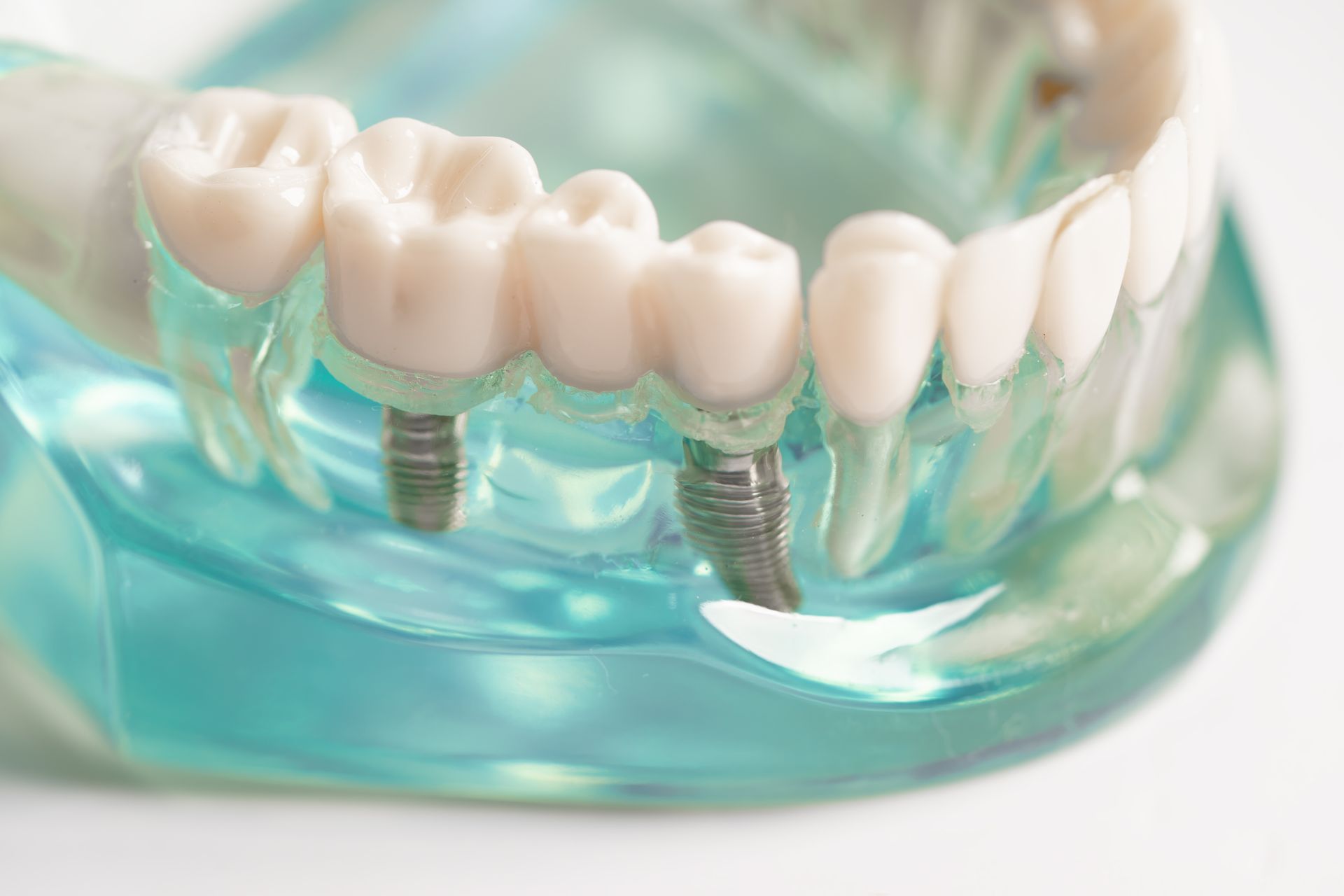
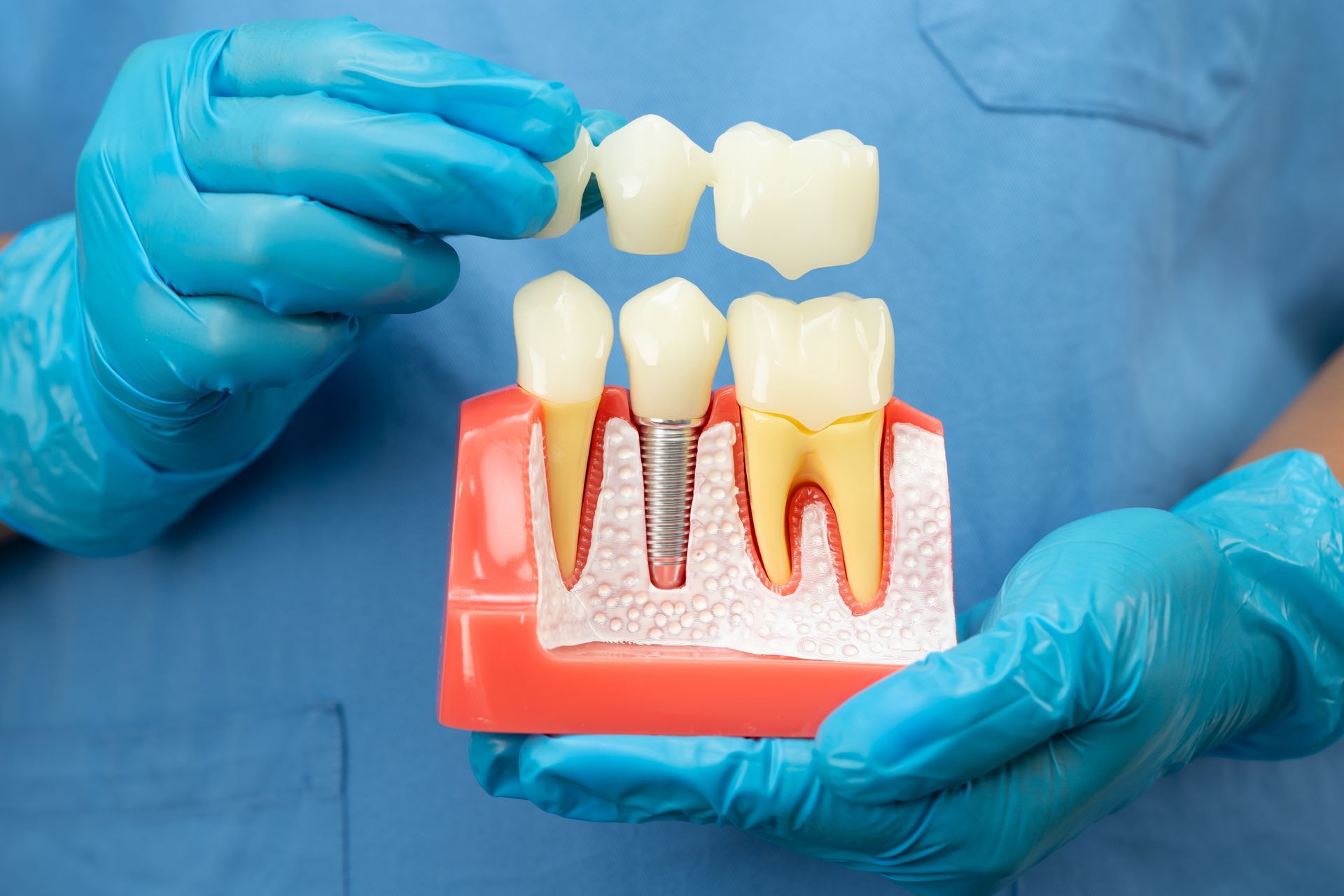
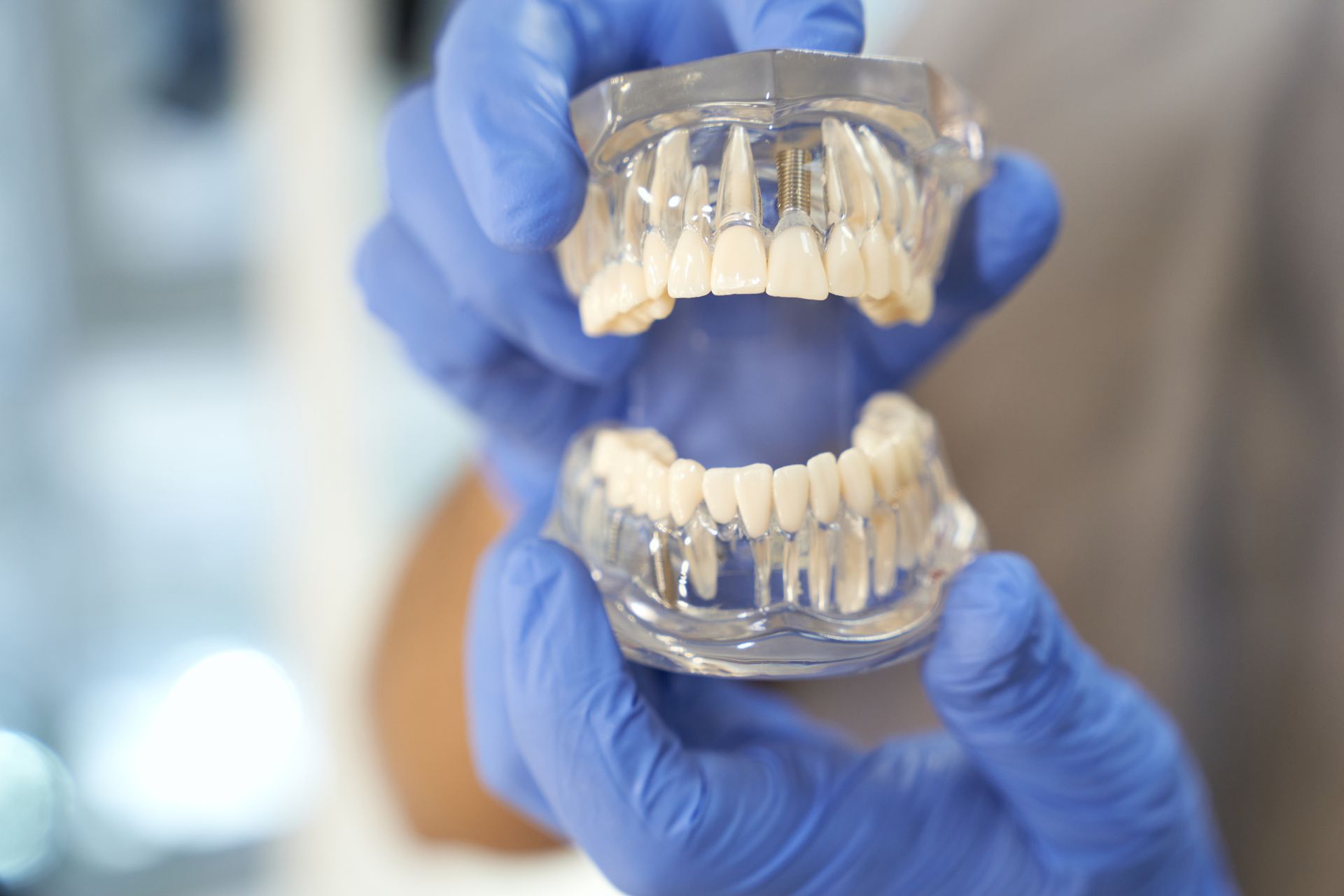
A full-arch bridge spans the entire upper or lower jaw and is anchored to implant posts. Because the bridge sits just above the gum tissue, there's a space underneath where food and bacteria collect throughout the day. Unlike natural teeth with individual spaces between them, the bridge creates one long surface that can harbor buildup if it isn't cleaned properly.
Why cleaning under the bridge is essential
The area between the bottom of the bridge and your gum tissue is the most important, and most commonly neglected, area to clean. If bacteria are allowed to sit there, they will eventually irritate the gums, cause odor, and in more serious cases, damage the bone that supports your implants. Cleaning under the bridge every single day is non-negotiable.
Areas patients commonly miss at home
The most frequently missed areas include:
- The underside of the full-arch bridge along the gumline
- The back of the bridge near the last implant post
- Around the implant posts themselves where the bridge connects
Your Daily Dental Implant Maintenance Routine
A solid daily routine doesn't have to be complicated. It does need to be thorough and consistent.
Brush gently at least twice a day
Use a soft-bristled toothbrush to brush all surfaces of the bridge, including the top, front, back, and the edges nearest your gums. Brush for at least two minutes. Morning and night are the minimum; brushing after meals is even better.
Clean along the gumline carefully
Hold your brush at a slight angle toward the gumline. This helps remove plaque right where the bridge meets your gum tissue, the area most likely to become inflamed if left dirty. Use gentle pressure. Scrubbing too hard does more harm than good.
Clean under the full-arch bridge every day
This step requires a tool that can fit into the space under your bridge (more on those tools below). Work your way from one end of the bridge to the other, cleaning the underside thoroughly. This should be done at least once a day, ideally before bed.
Use an alcohol-free antibacterial mouthwash
After brushing and cleaning under the bridge, rinse with an alcohol-free antibacterial mouthwash. Look for one that targets bacteria without drying out your mouth. Alcohol-based rinses can cause dry mouth, which actually makes bacterial growth worse over time.
Stay consistent with your at-home routine
Skipping days allows plaque to harden into calculus, which can only be removed by a professional. Try to build your implant care into your regular routine so it becomes automatic, not a second thought.
Best Tools for Cleaning Full-Arch Dental Implants
The right tools make a significant difference in how well you can clean around and under your bridge.
Soft-bristled toothbrushes
Always use a soft-bristled brush, manual or electric. Medium and hard bristles can scratch the surface of your bridge and irritate your gums. An electric toothbrush with a round oscillating head can be especially effective at removing plaque along the gumline.
Floss threaders and super floss
Floss threaders allow you to guide floss under your full-arch bridge so you can clean the underside and around the implant posts. Super floss has a stiffened end for easy threading and a spongy middle section that cleans the area under the bridge effectively. These are inexpensive, widely available, and very useful.
Interdental brushes
Also called proxy brushes, these small cone or cylinder-shaped brushes fit into the spaces around your implant posts and under the bridge. They're especially useful for removing debris from the areas a regular toothbrush can't reach. Choose a size that fits comfortably. It should slide in with gentle pressure, not force.
Water flossers
A water flosser (such as a Waterpik) uses a pressurized stream of water to flush out food and bacteria from under the bridge and around the gumline. Many implant patients find water flossers to be one of the most effective tools in their routine. Use it on a low to medium setting to avoid irritating the tissue around your implants.
Non-abrasive oral care products
Avoid toothpastes with harsh abrasives, baking soda, or whitening agents that can scratch or dull the surface of your bridge. Look for a toothpaste labeled as non-abrasive or specifically designed for dental restorations.
How to Prevent Bad Breath Around Full-Arch Implants
Bad breath from dental implants is one of the most common concerns patients bring up, and one of the most fixable. We cover this topic in more depth in our dedicated guide on what causes bad breath with dental implants, but here's what matters most for full-arch patients specifically.
Removing trapped food and plaque under the bridge
The underside of your full-arch bridge is a prime spot for food particles and bacteria to collect. When those bacteria break down food, they release sulfur gases that cause unpleasant odor. Daily cleaning under the bridge, with super floss, an interdental brush, or a water flosser, is the most direct way to address this.
Controlling bacteria around the gums
Bacteria around the gumline also contribute to odor. Brushing along the gumline carefully and using an antibacterial mouthwash helps keep bacterial counts low and breath fresher throughout the day.
Why dry mouth can make odor worse
Saliva plays a big role in controlling oral bacteria. When your mouth is dry, from medications, mouth breathing, or certain health conditions, bacteria multiply faster and odor gets worse. Staying well hydrated, avoiding alcohol-based mouthwashes, and talking to your dentist about dry mouth solutions can all help.
How to Prevent Gum Problems Around Full-Arch Implants
Healthy gums are the foundation that supports your implants. Protecting them is a daily commitment.
Early signs of gum inflammation to watch for
Keep an eye out for redness, puffiness, or tenderness around your implants. These are early signs that bacteria are irritating the tissue. Catching inflammation early makes it much easier to treat.
How plaque buildup can lead to peri-implant problems
When plaque is allowed to build up around implants over time, it can lead to peri-implant mucositis, which is inflammation of the gum tissue around the implant. If left untreated, this can progress to peri-implantitis, a more serious condition that involves bone loss around the implant posts. Poor hygiene is one of the leading reasons dental implants fail, which is why staying on top of your cleaning routine matters so much. Both conditions are preventable with consistent hygiene.
Why bleeding, redness, and swelling should not be ignored
Some people assume gum bleeding during cleaning is normal. It isn't, and it's especially important to take seriously around implants. Bleeding, redness, and swelling are signs that something is wrong and needs attention. Don't wait for it to get worse.
How to Protect Your Bridge from Damage
Your full-arch bridge is durable, but it's not indestructible. Taking steps to avoid mechanical stress and chemical damage will help it last.
Avoiding hard and sticky foods
Hard foods like ice, hard candies, and crusty bread can chip or crack your bridge material. Sticky foods like caramel or chewy candy can place stress on the attachment points. These don't have to be eliminated entirely, just eaten carefully and occasionally.
Preventing wear from clenching and grinding
Bruxism (clenching or grinding your teeth) puts significant pressure on your bridge and implant posts. If you grind at night, ask your dentist about a custom night guard. Protecting your bridge while you sleep is one of the most effective long-term preservation strategies.
Why aggressive brushing and harsh products can cause damage
Brushing too hard or using abrasive products gradually wears down the surface of your bridge. Stick to soft brushes and gentle technique. The goal is to clean the surface, not to scrub it.
Long-Term Habits That Help Full-Arch Implants Last
Beyond daily hygiene, certain habits and routines make a real difference over the years. For a broader look at caring for your implants over time, our complete guide to dental implant maintenance is a helpful resource to bookmark.
Keeping up with professional cleanings
At-home care is essential, but it's not enough on its own. Professional cleanings allow your dental team to remove hardened calculus buildup, check the condition of your bridge and implant attachments, and catch any early problems before they become serious. Most full-arch implant patients should be seen every three to four months, though your dentist will advise based on your specific situation.
Following your dentist's maintenance schedule
Your dentist will recommend a recall schedule tailored to your needs. Following that schedule, even when you feel like everything is fine, is one of the best investments you can make in the longevity of your implants.
Lifestyle habits that support healthier gums and implants
Smoking significantly increases the risk of peri-implant disease and implant failure. If you smoke, quitting is one of the most impactful things you can do for your implants. A nutrient-rich diet, good hydration, and managing systemic health conditions like diabetes also support healthier gum tissue and bone around your implants.
Common Full-Arch Implant Maintenance Mistakes to Avoid
Even well-intentioned patients make these mistakes. Knowing them can help you avoid them.
Skipping daily cleaning under the bridge
This is the most common, and most consequential, mistake. Even one or two days of missed cleaning under the bridge allows bacteria to accumulate. Over weeks and months, that adds up.
Relying on brushing alone
Brushing only cleans the outer and chewing surfaces of your bridge. It doesn't reach under the bridge where the most significant buildup occurs. You need at least one additional tool, such as super floss, an interdental brush, or a water flosser, to clean underneath.
Using abrasive toothpaste or improper tools
Whitening toothpastes, charcoal products, and hard-bristled brushes can scratch your bridge and irritate the surrounding tissue. Always check the ingredients and bristle type before using a new product.
Ignoring early warning signs
Waiting to address bleeding, pain, bad breath, or changes in how your bite feels allows small problems to grow into bigger ones. When something seems off, call your dentist.
Warning Signs Something May Be Wrong
Knowing what to look for helps you act quickly when something needs attention.
Persistent bad breath or foul taste
If bad breath doesn't go away after thorough cleaning, there may be an infection or a significant buildup of bacteria in an area you're not reaching. This warrants a call to your dentist.
Gum bleeding, redness, or swelling
As mentioned above, these are signs of inflammation and should not be dismissed. Consistent bleeding or significant swelling needs to be evaluated professionally.
Pain, pressure, or sensitivity
Discomfort around your implant posts or under your bridge is not normal and should be assessed promptly. Pain can indicate infection, bone changes, or a problem with the implant attachment.
Bridge movement, clicking, or looseness
If your bridge feels like it's shifting, clicking when you bite, or seems loose, contact your dentist right away. These signs can indicate a problem with the implant posts or the bridge's attachment hardware.
Food constantly getting trapped under the bridge
Some food collection under the bridge is normal. But if food is consistently getting packed into a specific area, especially with discomfort, it may mean there's a gap or fit issue that needs to be corrected.
When to Call Your Dentist
Some symptoms need prompt professional attention. Don't wait for your next scheduled visit.
Symptoms that need prompt evaluation
Call your dentist if you experience:
- Sudden or increasing pain around your implants
- Visible gum recession around an implant post
- A loose, cracked, or broken bridge
- Consistent foul taste or odor that doesn't respond to cleaning
- Any bleeding that doesn't resolve with improved hygiene
If you're dealing with a broken or damaged restoration, learn more about your options on our dental implant repair page.
Why early treatment can prevent bigger implant complications
Peri-implant disease, bone loss, and bridge failure are far easier, and less expensive, to treat when caught early. If you notice any of the symptoms above, early evaluation can mean the difference between a simple adjustment and a complex repair.
Final Thoughts on Dental Implant Maintenance for Full-Arch Restorations
Full-arch dental implants are one of the most effective and life-changing restorations available in dentistry today. Whether you have All-on-4 or All-on-6 implants, they restore function, appearance, and confidence, but they work best when supported by a committed maintenance routine.
The daily steps are straightforward: brush carefully, clean under the bridge, use the right tools, and follow up with your dental team on a regular schedule. These habits protect your investment and keep your smile healthy for the long term.
If you have questions about your implant maintenance routine or are noticing any changes in your gums, bite, or bridge, contact our office to schedule an evaluation. Our team is here to help you get the most out of your full-arch restoration.
Frequently Asked Questions About Full-Arch Dental Implant Maintenance
Share This Blog