
Dental Implants vs Bridges: Pros, Cons, and Cost Comparison

A dental implant is a titanium post placed in your jawbone that stands on its own, lasts for decades, and preserves the bone, but costs more upfront. A dental bridge anchors replacement teeth to the natural teeth on either side of the gap, so it is faster and cheaper at first but relies on those neighboring teeth, does not preserve bone, and usually needs replacing every 10 to 15 years. Over a 20-year span, an implant is often the more cost-effective choice. The right option depends on your bone health, budget, timeline, and the condition of the teeth beside the gap.
At Tampa Dental Implants, dental implants are all we do. Led by Dr. Keenan Osman, a trusted expert in implantology serving the Tampa Bay area from Lutz, our practice plans every case around what will actually last for the patient in front of us. This guide lays out the real pros, cons, and long-term costs of implants versus bridges so you can decide with clear information.
In This Guide
- The Core Difference: What truly separates them.
- What Is a Dental Implant?: How it works.
- What Is a Dental Bridge?: How it works.
- Implants vs Bridges Side by Side: The quick comparison.
- The Real Cost Comparison Over Time: Upfront versus lifetime.
- Which Is Right for You?: Matching the option to you.
- What About an Implant-Supported Bridge?: A third option.
- Frequently Asked Questions: Quick answers.
The Core Difference
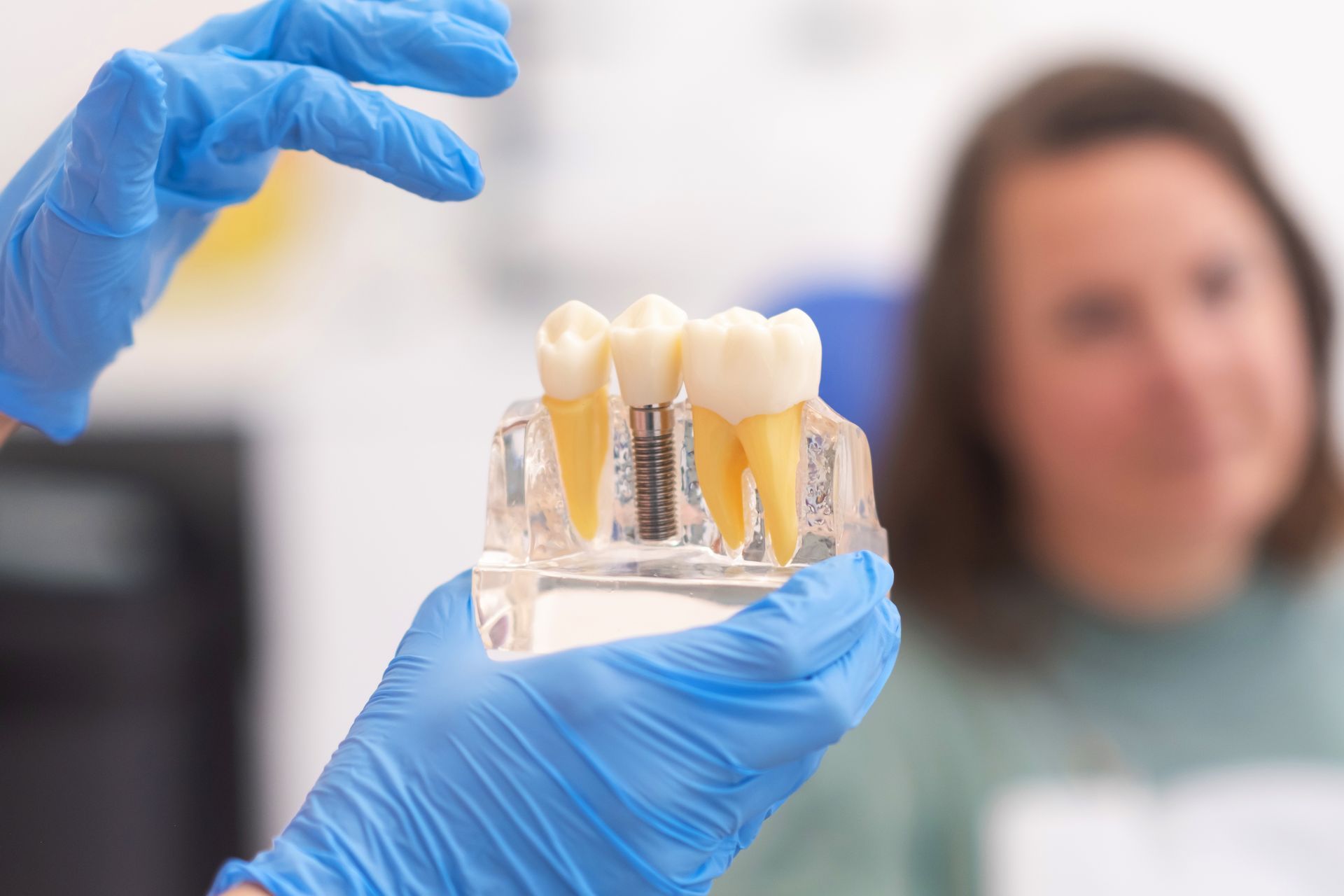
The single biggest difference is what holds the replacement tooth in place. A dental implant is anchored directly in your jawbone and stands completely on its own, independent of your other teeth. A dental bridge is anchored to the natural teeth on either side of the gap, so it depends entirely on those neighbors.
Almost every other difference flows from that one fact. Because an implant lives in the bone, it replaces the tooth root, preserves the jawbone, and leaves the surrounding teeth untouched. Because a bridge leans on adjacent teeth, those healthy teeth have to be filed down to hold it, and the gap underneath no longer stimulates the bone. Understanding this root-level difference makes the rest of the comparison much easier to follow, because it explains why implants cost more upfront but last longer, and why bridges are faster but ask more of your other teeth.
What Is a Dental Implant?
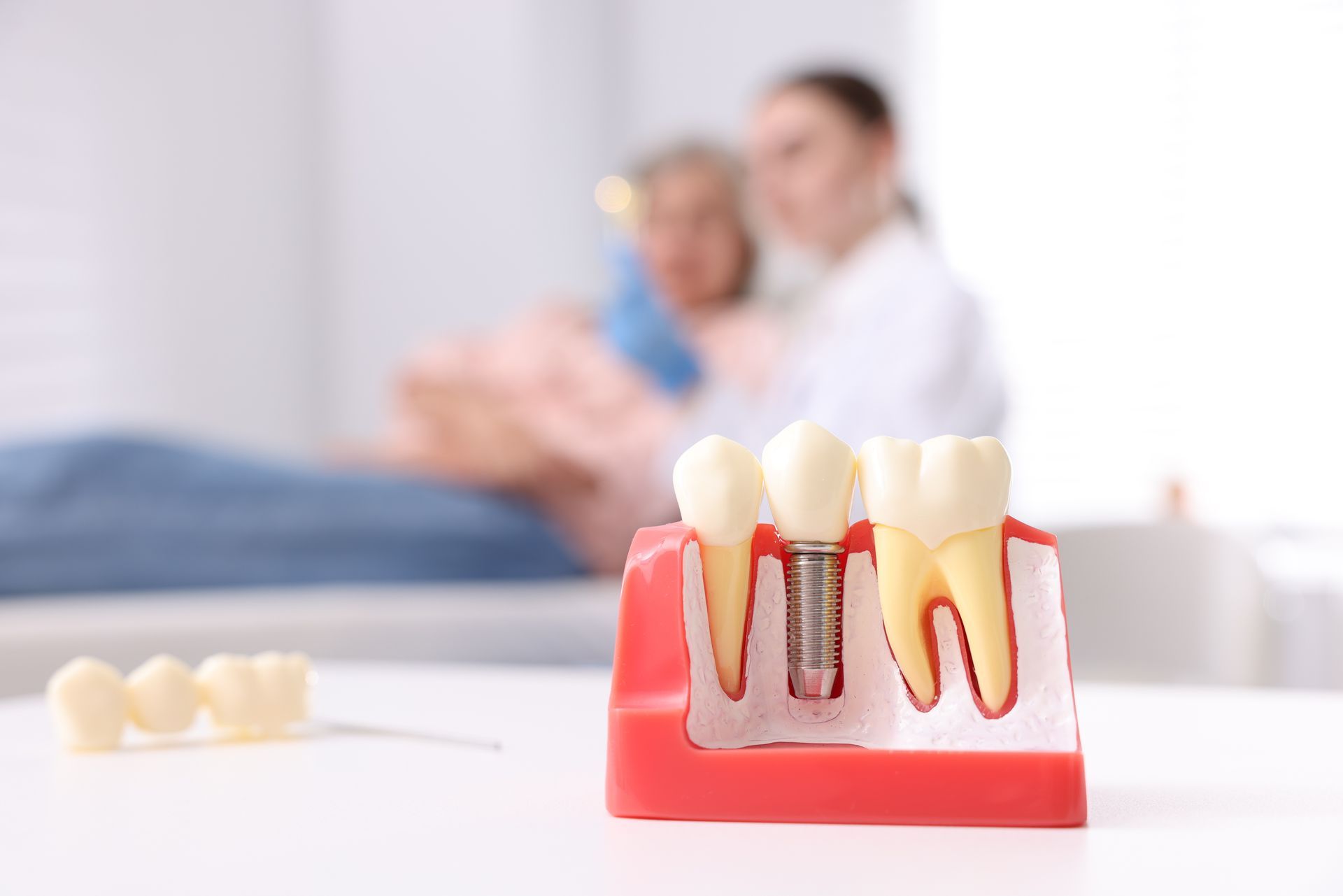
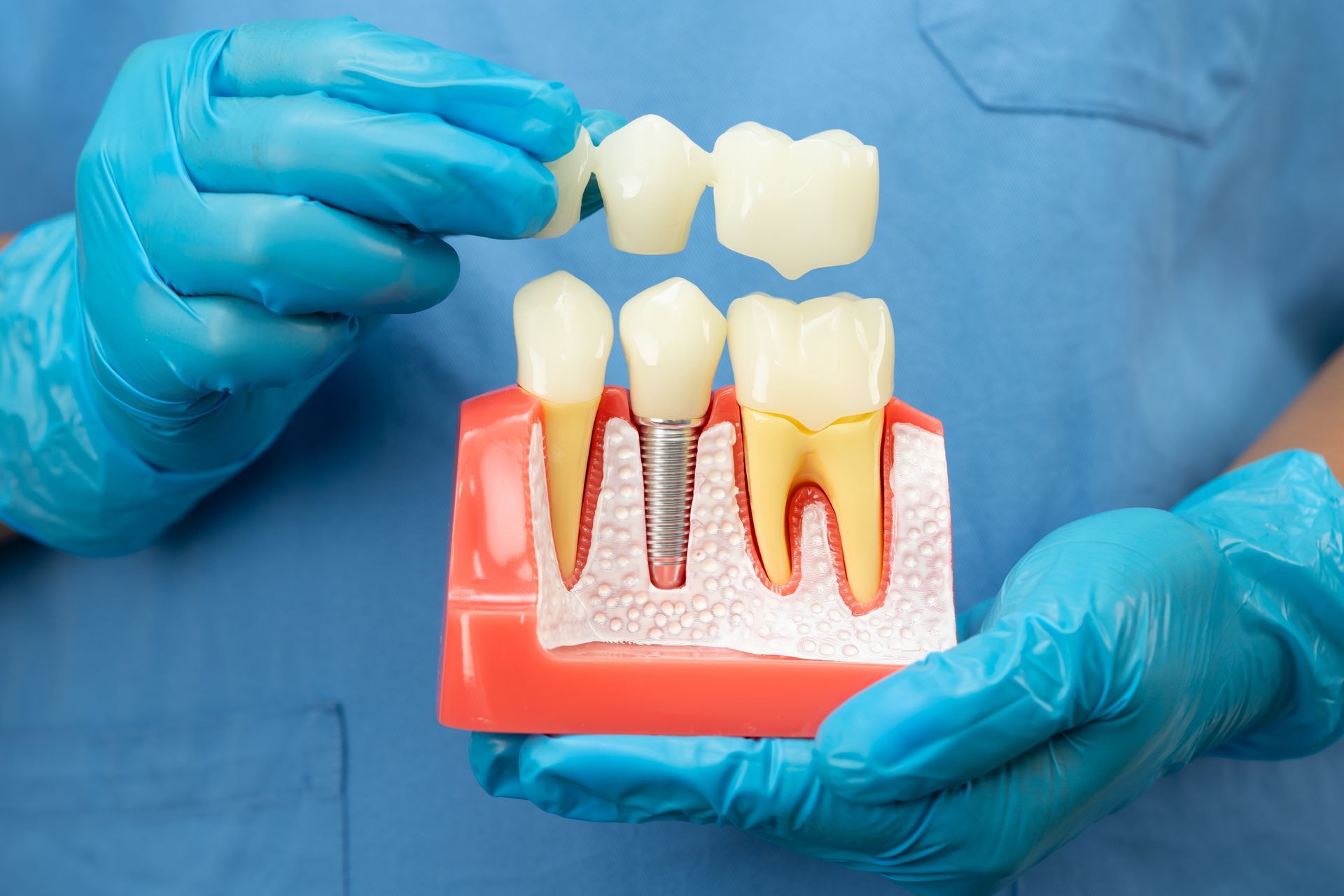
A dental implant is a small titanium post surgically placed into the jawbone, where it acts as an artificial tooth root. Over a few months, the bone fuses to the post in a process called osseointegration, creating a stable foundation. A connector called an abutment is then attached, and a custom crown is placed on top to complete the tooth.
The result is a replacement that looks, feels, and functions much like a natural tooth. Because the post is anchored in bone, it stimulates and preserves that bone the way a natural root would, and it does not depend on or affect the teeth around it. The tradeoff is that placing an implant requires minor surgery and several months of healing, and the upfront cost is higher. You can learn more on our dental implants page.
It is worth knowing why the timeline runs longer. After the post is placed, the bone needs time to grow around it and lock it in, and rushing that healing is what leads to failures. That patience is also what buys the durability, since a fully integrated implant becomes a permanent part of your jaw. For patients who want to avoid a long gap in their smile during healing, a temporary tooth can often be worn while the implant fuses, so you are not left with a visible space.
What Is a Dental Bridge?
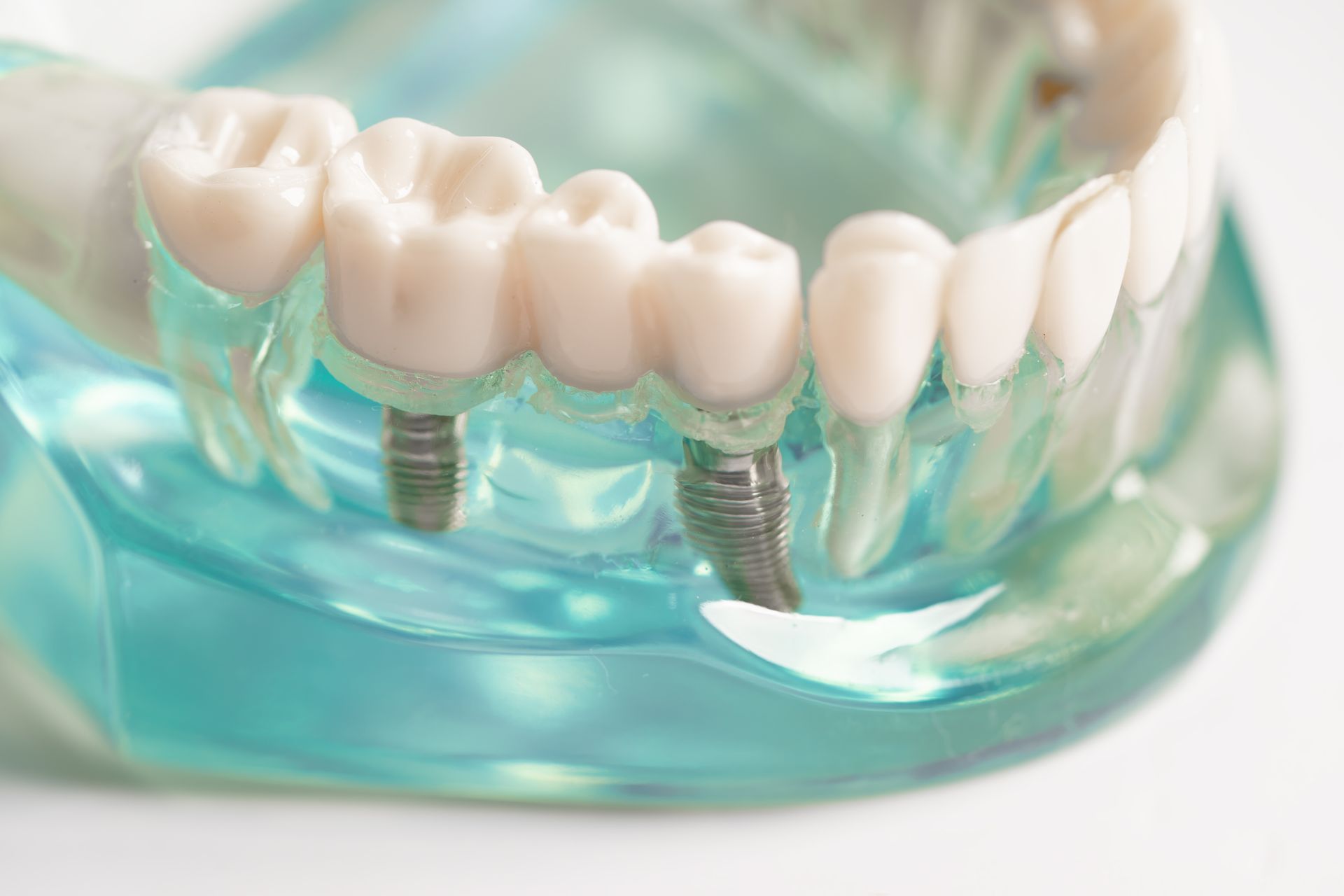
A traditional dental bridge replaces a missing tooth with an artificial tooth, called a pontic, that is held in place by crowns on the two natural teeth beside the gap. Those supporting teeth, called abutments, are filed down so the crowns can fit over them, and the whole bridge is cemented into place.
A bridge does not involve surgery and can usually be completed in about two to three weeks over a couple of visits, which makes it faster and less expensive upfront. The tradeoffs are meaningful, though. Two healthy teeth are permanently altered to support it, the area under the pontic no longer stimulates the bone, and bridges are harder to clean because you cannot floss between the connected teeth normally. That cleaning difficulty is why bridges often fail from decay on the supporting teeth over time.
Implants vs Bridges Side by Side
Seeing the two options next to each other makes the tradeoffs clear. The table below compares them on the factors that matter most.
| Factor | Dental Implant | Dental Bridge |
|---|---|---|
| How it is anchored | Titanium post in the jawbone | Crowns on the two adjacent teeth |
| Effect on nearby teeth | Leaves them untouched | Files down two healthy teeth |
| Bone preservation | Preserves jawbone | Does not preserve bone under the gap |
| Typical lifespan | 20 to 30-plus years, often a lifetime | Around 10 to 15 years |
| Timeline | Several months, includes healing | About 2 to 3 weeks |
| Upfront cost | Higher | Lower |
The Real Cost Comparison Over Time
Upfront, a bridge almost always costs less, which is where most comparisons stop. A single dental implant with its crown typically runs in the range of 3,000 to 6,000 dollars, while a traditional three-unit bridge often falls around 2,000 to 5,000 dollars. Based on that alone, the bridge looks like the cheaper choice.
The picture changes over time. A bridge generally needs replacing every 10 to 15 years, and each replacement carries a similar cost, while the supporting teeth may also need additional crown work or eventually fail. An implant, by contrast, is designed to last decades and often a lifetime, with only the crown occasionally needing replacement. Over a 20-year span, the repeated bridge replacements and related work often add up to more than the one-time implant. This is why an implant, despite the higher initial price, is frequently the more economical option in the long run. For a full breakdown, see our guide to
dental implant cost, and remember that the only accurate number comes from an exam of your specific case.
Which Is Right for You?
Neither option is universally better; the right one depends on your situation. An implant is usually the stronger choice when your bone is healthy, you are in good general health, and you want a long-term solution that does not touch your other teeth. It is especially compelling for a single missing tooth between two healthy neighbors, since a bridge would mean filing down those otherwise-healthy teeth.
A bridge can be the better fit in specific cases. If the teeth on either side of the gap already have large fillings or need crowns anyway, incorporating them into a bridge makes practical sense. A bridge is also worth considering when surgery is not ideal for your health, when you need a faster result, or when budget is the deciding factor in the short term. The best way to know which suits you is an evaluation that considers your bone, your neighboring teeth, your health, and your goals together.
It is also worth thinking about how each option affects daily life and long-term oral health. An implant is cleaned exactly like a natural tooth, with normal brushing and flossing, while a bridge requires threading floss underneath the connected teeth or using special cleaning aids, which some people find harder to keep up over the years. That maintenance difference is a big reason bridges tend to develop decay on the supporting teeth over time, whereas implants, being made of titanium and a crown, cannot decay at all. If you value the simplest long-term upkeep and the closest thing to your original tooth, the implant usually has the edge.
What About an Implant-Supported Bridge?
There is a third option that blends the two, and it is often the best answer when several adjacent teeth are missing. An implant-supported bridge looks and works like a traditional bridge, but instead of anchoring to natural teeth, it is supported by dental implants placed at each end of the span.
This approach gives you the bone preservation and independence of implants without placing a separate implant for every single missing tooth, which keeps it more affordable than individual implants across a large gap while avoiding the downsides of a tooth-supported bridge. It is an excellent solution for multiple missing teeth in a row, and you can read more on our
multiple teeth replacement page. For a single tooth, our
single tooth replacement options may be the better starting point.
Find the Right Tooth Replacement in Tampa
Choosing between an implant and a bridge is easier with an expert who can look at your specific case and tell you clearly what will last. As Tampa Bay's dedicated implant practice, we plan every case for the long term, not the quick fix, and we will tell you if a bridge is genuinely the better call for your situation.
Call Tampa Dental Implants at (813) 212-2628 or
contact us to schedule your free consultation with Dr. Osman, including a panoramic X-ray and treatment plan.
Frequently Asked Questions
Are dental implants better than bridges?
For many patients, yes, implants offer longer life, bone preservation, and no damage to neighboring teeth, which makes them the gold standard for tooth replacement. But bridges are not inferior in every case; they can be the better choice when adjacent teeth already need crowns, when surgery is not ideal, or when a faster, lower upfront cost matters most. The best option depends on your specific mouth, health, and goals.
Is a dental implant or bridge cheaper?
A bridge is cheaper upfront, typically 2,000 to 5,000 dollars versus 3,000 to 6,000 dollars for a single implant. Over the long term, however, implants are often more economical because bridges usually need replacing every 10 to 15 years while an implant can last decades. When you add up repeated bridge replacements and possible crown work on the supporting teeth over 20 years, the implant frequently costs less overall.
How long do dental bridges and implants last?
A traditional dental bridge typically lasts around 10 to 15 years before needing replacement, and sometimes less if decay develops on the supporting teeth. A dental implant is designed to last much longer, commonly 20 to 30 years or more, and often a lifetime, with only the crown occasionally needing replacement. Good oral hygiene and regular dental visits help both options reach their full lifespan.
Does a bridge damage the teeth next to it?
Yes, to a degree. A traditional bridge requires filing down the two healthy teeth on either side of the gap so crowns can be placed over them to support the bridge. This permanently alters those teeth. An implant avoids this entirely, since it stands on its own in the jawbone and does not rely on or affect the neighboring teeth.
Can I get an implant if I've been missing a tooth for a long time?
Often yes, though it depends on your bone. When a tooth has been missing for years, the jawbone in that area can shrink from lack of stimulation, which may mean a bone graft is needed before placing an implant. An evaluation with a 3D scan shows exactly how much bone you have and whether grafting is required, so a long-standing gap does not automatically rule out an implant.
Share This Blog