
Is a Loose Dental Implant an Emergency? When to Get Help

Quick answer: It depends on which part is loose. If only the crown is moving, it is urgent but usually not a same-day emergency. If the implant post itself moves in the bone, or if you have pain, swelling, bleeding, pus, or a bad taste, that is a same-day emergency. The part most people get wrong: a failing implant is often painless, because there is no nerve inside it and no ligament around it. The absence of pain is not reassurance, and any movement at all means you should be seen.
Tampa Dental Implants is an implant-focused practice led by Dr. Keenan Osman, and loose implants are one of the calls we take most often, including from patients whose implants were placed elsewhere. This guide is written to help you figure out what you are dealing with tonight, not to alarm you.
In This Guide
- The three parts, and why it matters
- How to tell which part is loose
- When it is a same-day emergency
- Why no pain is not good news
- Timing tells you a lot
- If you have a full-arch bridge
- What not to do while you wait
- What causes an implant to loosen
- What happens at the appointment
- Get it checked
- Loose implant FAQs
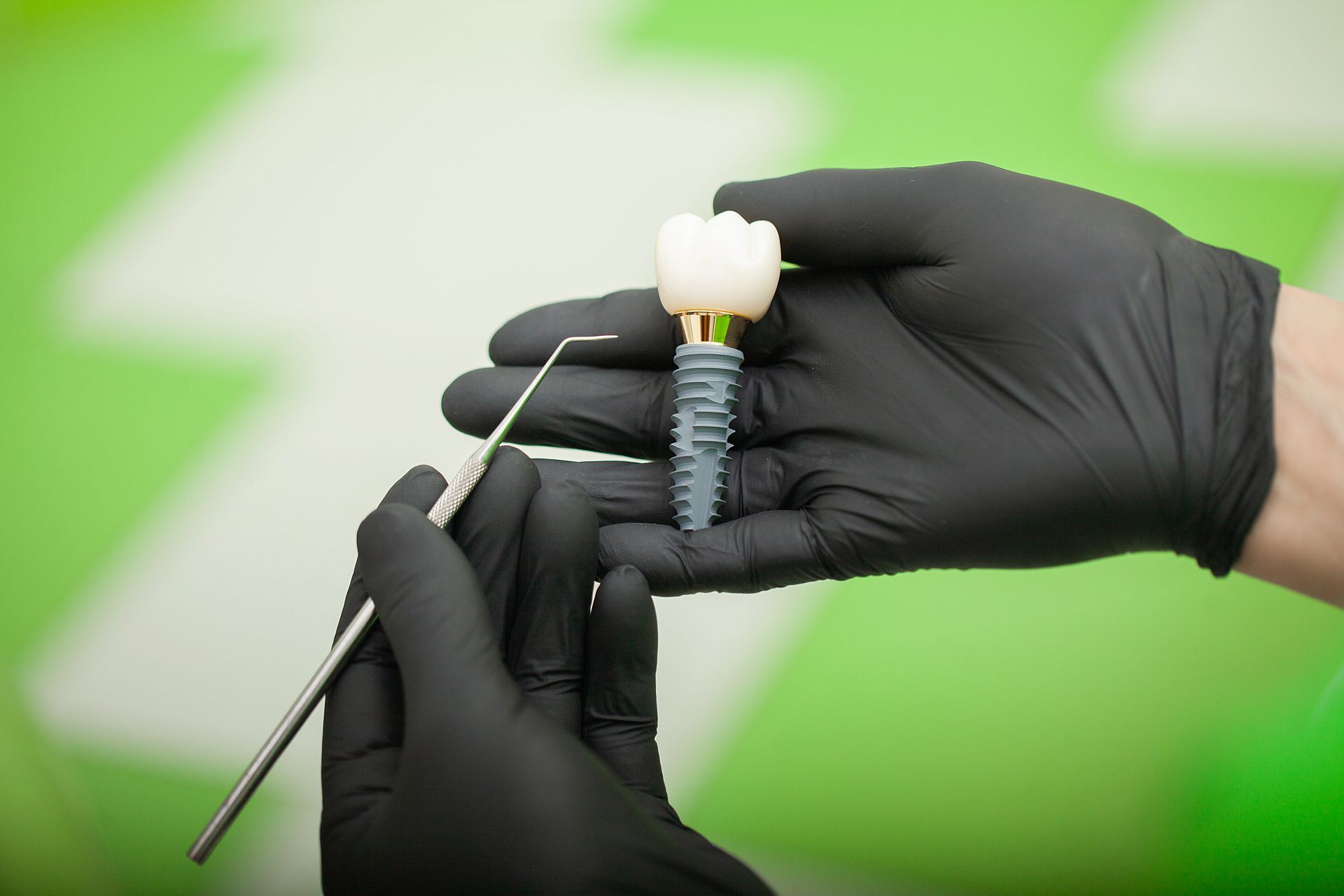
The three parts, and why it matters
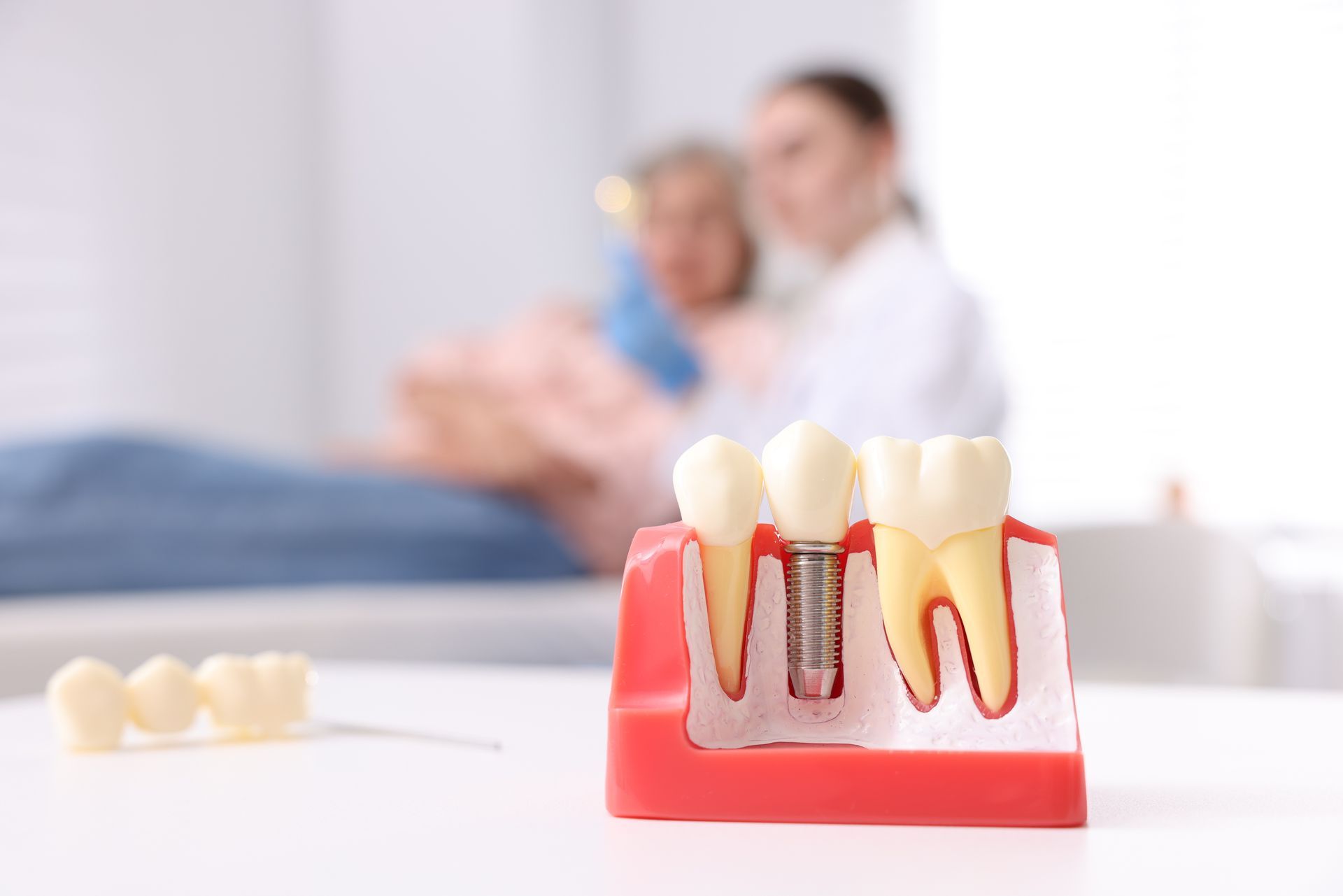
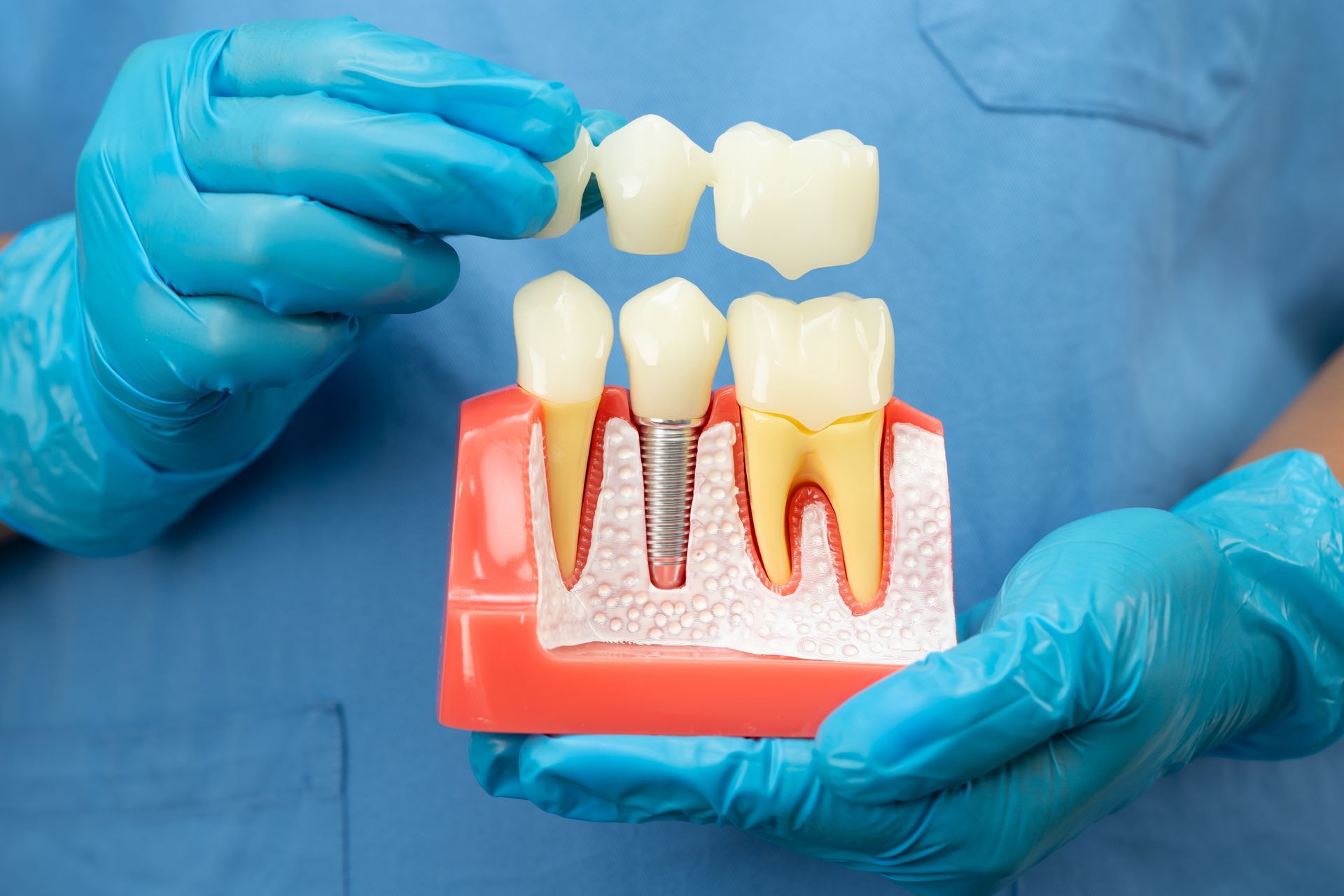
What looks like one tooth is actually three components stacked together, and "my implant is loose" can mean three very different problems.
The implant post is the titanium screw in your jawbone, replacing the root. You cannot see it. It should never move.
The abutment is the connector between the post and the crown, held by a small screw. It is the part that loosens most often, and studies of loose-implant cases attribute a large share of them, by some accounts around a third, to abutment screw loosening.
The crown is the visible tooth, either cemented or screwed onto the abutment. A crown that comes loose from failed cement is the least serious version of this problem.
The urgency runs in that order, in reverse. A loose crown is a repair. A loose post is a question about whether the implant survives.
How to tell which part is loose
You can get a reasonable read at home without touching anything repeatedly. Look and observe rather than test.
| What you notice | Likely cause | How urgent |
|---|---|---|
| Crown rocks or rotates slightly, gums look normal, no pain | Loose crown or abutment screw | Call within a day or two |
| Crown came off entirely, the post underneath looks intact | Cement or screw failure | Call next business day, keep the crown |
| The whole unit moves with the gum when you press | Implant post movement | Same day |
| Movement plus pain when biting | Post-level problem or infection | Same day |
| Gums red, swollen, bleeding, pus, or persistent bad taste | Peri-implantitis | Same day |
| Implant placed within the last few months and now moves | Failed integration | Same day |
The distinction that matters most is whether the movement is above the gumline or of the whole unit including the gum tissue. A crown wiggling on a stable base feels like something on top moving. A post moving in bone feels like the tooth itself shifting.
One caution: do not keep testing it. Every wiggle disrupts the bone contact the implant depends on, and a post that is marginally loose can be pushed past saving by a week of poking at it.
When it is a same-day emergency
Call for same-day care if you have any of these:
- The implant post itself moves, meaning the whole unit including the gum shifts when you touch it.
- Pain when biting, especially pain that is new or getting worse.
- Swelling of the gum or face, which points to infection rather than a mechanical problem.
- Pus, bleeding, or a persistent bad taste around the implant.
- Fever, which means infection may be spreading and is a medical urgency, not just a dental one.
- The implant feels like it has sunk or changed height, or your bite suddenly feels different on that side.
- A piece has come off and you cannot find it. Aspirating or swallowing a small component is uncommon but is a reason to be seen.
If only the crown is loose, there is no pain, and the gums look healthy, you can reasonably call in the morning rather than tonight. What you should not do is leave it for a few weeks, because a loose crown lets bacteria into the connection and puts uneven force on the implant below.
Why no pain is not good news
This is the single most useful thing to understand about implants, and it is why patients wait too long.
A natural tooth has a nerve inside it and a periodontal ligament around the root. Both send pain signals early when something goes wrong. An implant has neither. It is titanium fused directly to bone, with no nerve and no ligament, so the warning system a natural tooth gives you simply is not there.
The practical consequence is that peri-implantitis, the inflammatory bone loss that causes most late implant failures, can progress substantially while feeling like nothing at all. By the time an implant is loose enough to notice, meaningful bone has usually already been lost.
So the rule is the opposite of what people assume: with implants, movement is the symptom, not pain. Treat movement as the alarm and do not wait for discomfort to confirm it. Our page on
dental implant problems covers the other warning signs worth knowing.
Timing tells you a lot
When the looseness appears is one of the strongest clues about what caused it.
In the first few months after placement
This points to a problem with osseointegration, meaning the bone never fully fused to the implant. It is called early failure, and causes include infection at placement, insufficient bone at the site, too much force applied too soon, and smoking during healing.
Early failures are disappointing but usually straightforward: the implant is removed, the site is allowed to heal and often grafted, and a new implant is placed later. Sites that failed once frequently succeed the second time.
Years after a successful implant
An implant that worked well for years and then loosened is a different story. The most common cause is an abutment or crown screw backing out under chewing forces, which is a repair rather than a failure. The second most common is peri-implantitis eating away the supporting bone.
The two feel similar to a patient and are entirely different in prognosis, which is why imaging is part of the visit rather than optional.
If you have a full-arch bridge
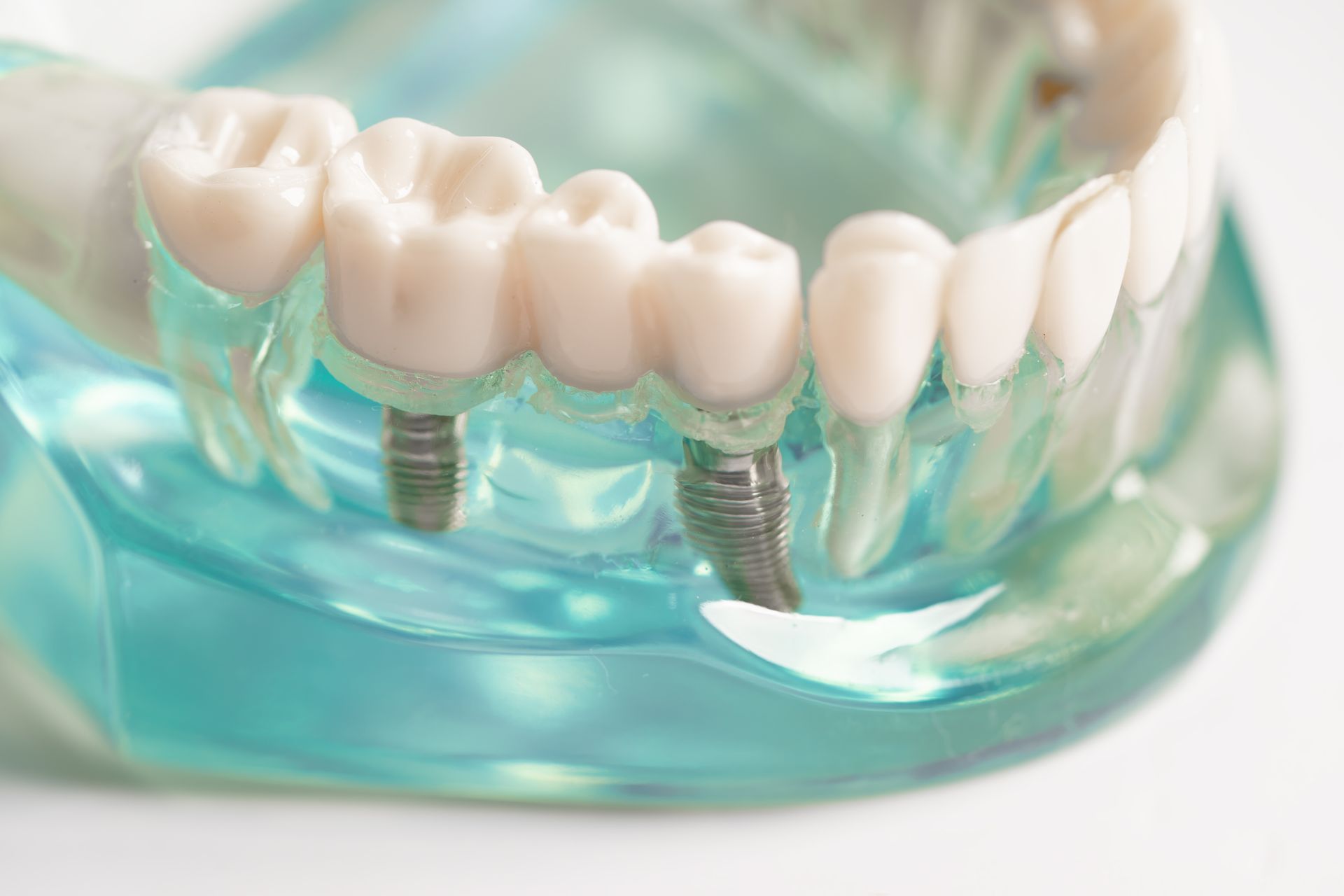
For patients with All-on-4, All-on-6, or 3-on-6, "my teeth feel loose" usually means something different.
The prosthesis is anchored to several implants with prosthetic screws. When one of those screws loosens, the whole bridge can feel like it moves slightly or clicks, even though every implant underneath is perfectly stable. That is a common and very fixable issue.
It also means you may not notice a single failing implant, because the neighboring ones hold the bridge in place and mask the movement. That is one of the reasons full-arch patients need their maintenance appointments, where the prosthesis is removed and each implant is checked individually. Our guide to
full-arch implant maintenance explains that schedule.
What not to do while you wait
- Do not keep wiggling it. Repeated movement damages the bone-to-implant contact and can turn a salvageable situation into an extraction.
- Do not try to re-cement or glue anything. Household adhesives near an open connection introduce bacteria and complicate the actual repair.
- Do not tighten anything yourself. Abutment screws are torqued to manufacturer specifications with a calibrated driver; hand-tightening either fails or damages the threads.
- Do not chew on that side. Load is what pushes a marginal situation over the line.
- Do not wait for pain to decide. See the section above.
- Do not skip the visit because the crown "went back on." A crown that seated itself again is still telling you the connection underneath failed.
In the meantime, keep the area clean with gentle brushing and a warm saltwater rinse, and take over-the-counter pain relief if you need it.
What causes an implant to loosen in the first place
Understanding the cause is what keeps it from happening to the next one.
Bite force and grinding
Implants have no ligament to absorb shock, so force transfers straight into bone and hardware. Clenching and grinding are behind a large share of the screw loosening we see, and a night guard is often the difference between a one-time repair and a recurring problem.
Peri-implantitis
Bacterial inflammation around the implant that destroys supporting bone. Risk factors are the familiar ones: inconsistent hygiene, a history of gum disease, smoking, and skipped maintenance visits. It is the leading cause of late failure and the most preventable.
Placement and restoration factors
Insufficient bone at the site, an implant angled in a way that loads it poorly, a crown that is too tall for the implant beneath it, or a bite that was never adjusted to distribute force evenly. These surface as problems months or years later rather than immediately.
Trauma and habits
A blow to the face, chewing ice or hard candy, opening packaging with your teeth, or a tongue that keeps pushing on a new restoration. Small repeated forces do more damage than people expect.
What happens at the appointment
We start by determining which component is moving, which usually takes a few minutes with a visual exam and gentle testing. Then imaging, because the bone level around the implant is the information that decides everything and it is not visible from the surface.
From there, the situation generally falls into one of three categories. A loose crown or abutment screw is retightened to specification or the component is replaced, often in one visit. Peri-implantitis with a stable implant is treated by cleaning the implant surface and managing the infection, sometimes with grafting to rebuild lost bone. A mobile implant post is removed, because an implant that has lost its bone attachment will not re-integrate on its own.
What happens after removal is its own conversation, and it is usually more hopeful than patients expect. Our
dental implant repair page covers the fixes in detail, and
implant failure treatment explains why failure rates are low and what happens when it does occur.
Get it checked
If your implant is moving, call us. We see implant emergencies for our own patients and for patients whose implants were placed by someone else, including cases where the original office is no longer available.
Call Tampa Dental Implants at
(813) 212-2628 or
contact us here. We are at 2425 Brunello Trace in Lutz and see patients from across the Tampa area. For other urgent situations, see our
dental emergencies page.
Loose implant FAQs
Can a loose dental implant tighten itself?
No. If an abutment or crown screw has loosened, it needs to be retightened to the manufacturer's torque specification with the proper instrument. If the implant post has lost bone attachment, nothing about chewing or time will restore it, and continued use makes it worse.
Is a loose implant crown the same as a failed implant?
No, and this is the most common misunderstanding. The crown is the visible tooth on top, and a loose crown is frequently a cement or screw issue with a perfectly healthy implant underneath. Only movement of the post itself indicates implant-level failure.
How long can I wait to have a loose implant looked at?
If the post is moving or you have pain or swelling, same day. If only the crown is loose with no other symptoms, within a couple of days. Waiting weeks risks turning a repair into a removal, since an exposed connection collects bacteria and uneven loading accelerates bone loss.
Does a loose implant always have to be removed?
No. Many cases are component problems that are repaired without touching the implant, and some infections are treated with the implant left in place. Removal is reserved for implants that have genuinely lost their attachment to bone.
Can I still eat with a loose implant?
Eat on the other side until you are seen. Soft foods, nothing hard or sticky, and no chewing on the affected implant. Every bite on a loose implant adds force to a connection that is already compromised.
Share This Blog