
Can a Loose Dental Implant Be Saved? Repair vs. Replacement

Often, yes. Most "loose implants" are actually a loose crown or abutment screw, and those can usually be tightened, replaced, or recemented in a single visit while the implant stays in place. When the implant post itself is loose in the bone, it usually cannot be tightened back, but it can often be removed, the site rebuilt with a bone graft if needed, and a new implant placed after healing. The deciding factors are which part is loose, how much bone remains, and what caused it.
Tampa Dental Implants is an implant-focused practice led by Dr. Keenan Osman, who has placed thousands of dental implants and handles everything from single-tooth implants to All-on-4, All-on-6, and zygomatic cases at our office in Lutz. We regularly repair and replace implants placed at other offices, and every implant we place carries a 10-year warranty when patients keep up with their checkups. This guide explains what can be saved, what cannot, and what each path involves.
In This Guide
- The Short Answer by Part: What can and cannot be fixed.
- Repairs That Keep the Implant: Screws, abutments, and crowns.
- Saving an Implant With Bone Loss: Treating peri-implantitis.
- When the Implant Has to Be Replaced: Removal, grafting, and a new implant.
- Loose Implants in Full-Arch Bridges: All-on-4 and All-on-6 cases.
- How We Decide: Repair or Replace: The factors that matter.
- Preventing It From Happening Again: Fixing the cause.
- Frequently Asked Questions: Quick answers.


The Short Answer by Part
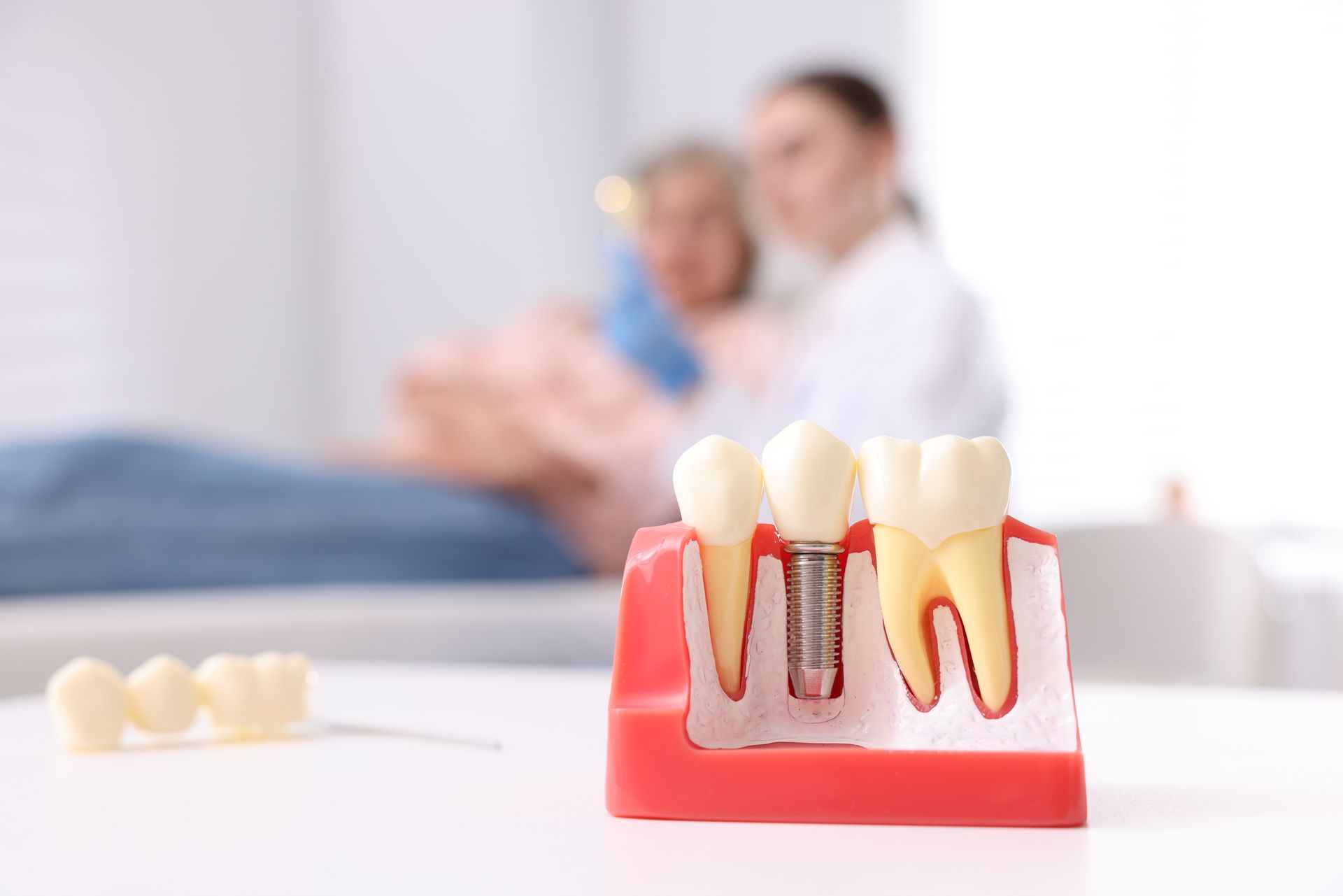
An implant has three parts: the post in the jawbone, the abutment that connects to it, and the crown or bridge on top. Which one is loose decides almost everything. If you are not sure yet, our guide to
whether a loose dental implant is an emergency explains how to tell the parts apart and when to be seen the same day.
| What Is Loose | Can It Be Saved? | Typical Fix |
|---|---|---|
| Crown only (cemented) | Yes, in most cases | Clean and recement, or replace the crown if damaged |
| Abutment screw | Yes, in most cases | Retighten or replace the screw to the correct torque |
| Abutment itself | Usually | Replace the abutment and check the connection |
| Implant with early bone loss | Often | Peri-implantitis treatment, sometimes with a graft |
| Implant with major bone loss | Rarely | Remove, graft if needed, place a new implant later |
| Implant that never fused | No | Remove, allow healing, and place a new implant |
The first three rows are mechanical problems. The last three involve the bone, which is where the answer changes.
Repairs That Keep the Implant
When the implant post is still solid in the bone, the fix is usually simple, and the implant is not going anywhere.
Retightening or Replacing the Screw
A loose abutment screw is one of the most common reasons an implant tooth feels wobbly. Screws can back out over time from heavy chewing, grinding, or a bite that puts sideways force on the crown. The dentist removes the crown or accesses the screw, checks the threads, and either retightens it to the manufacturer's specified torque or replaces it with a new screw. A screw that has loosened more than once should usually be replaced rather than simply tightened again. Screws are designed to stretch slightly when torqued, and a screw that has already loosened has often lost some of that holding ability.
Replacing the Abutment
If the abutment is damaged, worn, or does not seat properly, it can be replaced. This matters more than it sounds. A poorly fitting abutment lets bacteria collect at the connection and puts uneven stress on the implant, which can lead to bone loss over time.
Recementing or Replacing the Crown
A cemented crown that comes loose can often be cleaned and recemented. If it is cracked, chipped, or no longer fits well, a new crown is made. Keep a crown that falls off and bring it with you. It may save you the cost of a new one.
Why These Repairs Should Not Wait
A loose crown or screw is not failure, but it can lead to it. A wobbly restoration traps bacteria and rocks the implant every time you chew, which can damage the bone and the internal connection. Getting it fixed promptly protects the implant underneath.
Saving an Implant With Bone Loss
When the problem is in the gums and bone, the question becomes how much support is left.
Peri-Implant Mucositis
Inflammation of the gums around an implant without bone loss is called peri-implant mucositis. It usually shows up as bleeding and redness, and it is reversible with professional cleaning and better home care. At this stage, the implant is not loose.
Early Peri-Implantitis
When the infection reaches the bone, it becomes peri-implantitis. Caught early, it can often be treated with deep cleaning around the implant surface, antimicrobial treatment, and closer follow-up. The implant may feel slightly tender but is usually still stable.
Advanced Peri-Implantitis
With more bone loss, treatment may involve a surgical procedure to open the gums, clean and decontaminate the implant surface, and in some cases place a bone graft to rebuild lost support. Whether this is worth doing depends on how much bone is gone and the shape of the defect. An implant that is already mobile because of bone loss usually has too little support left to save. Our guide to
common dental implant problems explains how peri-implantitis develops.
When the Implant Has to Be Replaced
If the implant post moves in the bone, it has lost its attachment. Bone does not reattach to an implant once that bond is lost, so tightening or waiting will not fix it.
Removing the Implant
A failed implant is usually removed with specialized instruments designed to take it out while preserving as much surrounding bone as possible. In many cases, a loose implant comes out with little effort because the bond is already gone. The procedure is done with local anesthesia, and we include IV sedation for implant procedures for patients who want it.
Rebuilding the Site
After removal, the site is cleaned thoroughly. If there is a bone defect, a bone graft may be placed at the same time to rebuild the area. Our guide to bone grafts for implants explains the materials and healing process.
Placing a New Implant
Once the bone has healed, often after a few months, a new implant can usually be placed. In some cases with good bone and no infection, a new implant may be placed at the same visit. After the new implant fuses with the bone, a new abutment and crown complete the restoration. Replacement success rates are generally good, especially when the cause of the first failure has been identified and corrected.
When Bone Loss Is Severe
Occasionally, a failed implant leaves behind more bone loss than a standard graft can easily rebuild, especially in the upper back jaw near the sinus. In those cases, a sinus lift or a different implant approach may be needed. For patients who have lost bone over many years, our guide on getting a dental implant years after an extraction walks through the options for rebuilding or working around limited bone.
A Realistic Timeline
| Path | What Happens | Typical Time Frame |
|---|---|---|
| Screw or crown repair | Tighten, replace, or recement | Often a single visit |
| Peri-implantitis treatment | Cleaning, possible surgery or graft | A few weeks to several months with follow-up |
| Replace without graft | Remove, heal, place new implant, restore | Several months |
| Replace with graft | Remove, graft, heal, place new implant, restore | Often six months or more |
Loose Implants in Full-Arch Bridges
With All-on-4 and All-on-6 restorations, a loose feeling can come from the bridge, a screw, or one of the implants underneath.
When the Bridge Is Loose
If the full-arch bridge rocks as a unit, the cause is often a loose prosthetic screw. That is usually a straightforward repair. The bridge is removed, the screws and connections are checked, and it is reattached with new screws if needed.
When One Implant Fails
Full-arch bridges are designed with several implants sharing the load. If one implant fails, the bridge may still be supported by the others for a time, but the load on the remaining implants increases. Depending on the case, the failed implant may be replaced and the bridge reattached, or the bridge may be modified. This is one reason All-on-6 cases have more margin than All-on-4, as we explain in our guide to All-on-6 dental implants.
Regular Maintenance Matters
Full-arch bridges should be removed and cleaned professionally at regular intervals. Our guide to
full-arch implant maintenance covers what that involves.
How We Decide: Repair or Replace
Every case is different, but these are the factors that drive the decision:
- Which part is loose, confirmed by examination, not just how it feels.
- Bone level on X-rays, compared with earlier images if they are available.
- Pocket depth and bleeding around the implant.
- Whether the implant moves independently of the crown.
- The cause of the problem, such as grinding, a bite imbalance, infection, or smoking.
- The implant system, since parts for older or uncommon systems can be harder to source.
- Your overall health, including conditions like diabetes that affect healing.
Implants Placed Elsewhere
Many patients who come to us with loose implants had them placed at another office, sometimes years ago or in another country. Identifying the implant brand and connection type is an important first step, because it determines which replacement screws, abutments, and tools will work. Bring any records you have, including the implant brand, placement date, and X-rays. If you do not have them, the office that placed the implant can usually send them.
Preventing It From Happening Again
Fixing a loose implant without fixing the reason it loosened is a short-term solution. The most common underlying causes include:
- Grinding or clenching, which overloads screws and bone. A nightguard is often recommended.
- A bite that puts too much force on the implant, which may need adjustment.
- Plaque buildup and gum inflammation, addressed with better cleaning and more frequent professional visits.
- Smoking, which increases the risk of peri-implantitis. See our guide to the risks of smoking after dental implants.
- Uncontrolled health conditions, such as diabetes, that affect gum and bone health.
Regular checkups let us catch screw loosening and early bone loss before they become bigger problems. That is also why our implant warranty depends on patients returning for cleanings every six months.
Get Your Loose Implant Evaluated in Tampa
If your implant feels loose, the sooner it is examined, the more likely it can be saved or repaired simply. Dr. Osman and our team can identify which part is loose, check the bone, and explain whether repair or replacement makes the most sense. Learn more about our dental implant repair services and single tooth implants.
Call Tampa Dental Implants at (813) 212-2628 or
contact us to schedule an evaluation at our office at 2425 Brunello Trace in Lutz, serving patients across the Tampa Bay area.
Frequently Asked Questions
Can a loose dental implant tighten back up on its own?
No. If the implant post has lost its bond with the bone, it will not reattach on its own. If the looseness comes from a crown or screw, it will not fix itself either, but a dentist can usually tighten or replace the part in a short visit.
How do I know if it is the implant or the crown that is loose?
A dentist can tell by examining the tooth and taking an X-ray. If only the crown moves, the problem is usually mechanical. If the implant post moves in the bone, it has lost its attachment. Our guide on whether a loose implant is an emergency explains the signs.
How much does it cost to fix a loose implant?
It depends on the cause. Tightening or replacing a screw or recementing a crown usually costs far less than replacing the implant. Removing and replacing an implant, especially with a bone graft, costs more because it involves surgery and a new restoration.
Can a failed implant be replaced with a new one?
In many cases, yes. The failed implant is removed, the site heals, and a bone graft may be placed if needed. A new implant can often be placed a few months later once the bone is ready.
What happens if I ignore a loose implant?
A loose crown or screw can damage the internal connection and let bacteria collect, which can lead to bone loss. A loose implant post can cause infection and further bone loss, making replacement more complex. Getting it checked promptly gives you the most options.
Share This Blog