Can You Get a Dental Implant Years After an Extraction?

Yes. There is no deadline for getting a dental implant, and many patients get implants 10, 15, or even 20 years after a tooth was pulled. What changes with time is not whether an implant is possible, but what it takes. The jawbone shrinks where the tooth used to be, neighboring teeth can drift into the gap, the opposing tooth can grow toward it, and in the upper back jaw the sinus can expand down into the space. Depending on what a 3D scan shows, you may be able to get an implant directly, or you may need a bone graft, a sinus lift, or a different implant approach first.
Tampa Dental Implants is an implant-focused practice led by Dr. Keenan Osman, who has placed thousands of dental implants. At our office in Lutz, we regularly treat patients who have been missing teeth for years or have worn dentures for decades, including cases that call for bone grafting, sinus lifts, All-on-4 and All-on-6, and zygomatic implants. This guide explains what changes in your mouth over time and how those changes shape your options.
In This Guide
- What Happens After a Tooth Is Pulled: Changes over the years.
- How We Evaluate a Long-Missing Tooth: What the exam and scan look for.
- Your Options Based on Remaining Bone: From direct placement to zygomatic implants.
- Upper Jaw vs. Lower Jaw: Why location matters.
- When Neighboring Teeth Have Moved: Fixing the space first.
- Long-Term Denture Wearers: Implants after years of dentures.
- What the Timeline Looks Like: How long treatment takes.
- Frequently Asked Questions: Quick answers.

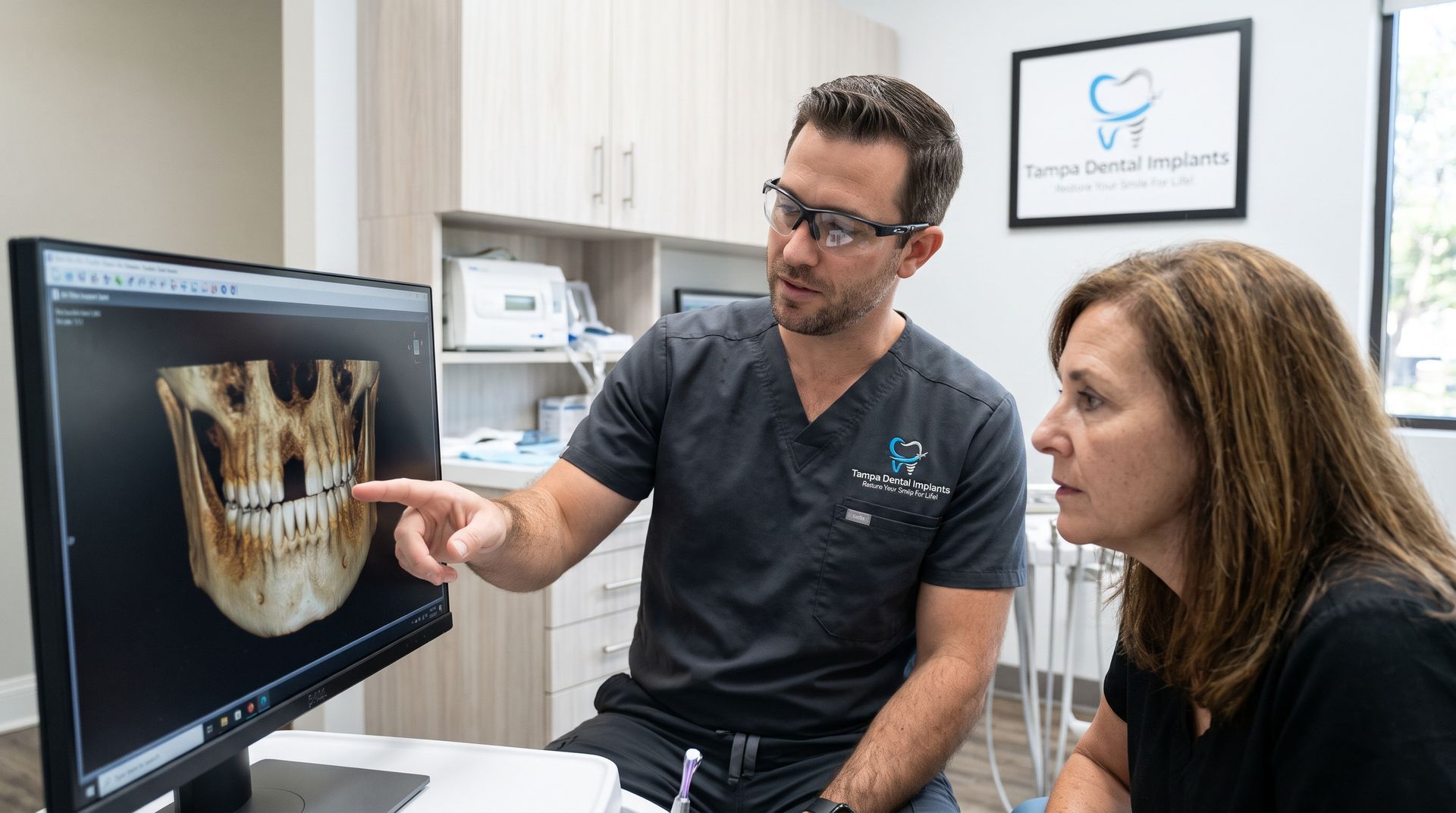
What Happens After a Tooth Is Pulled
The biggest changes happen in the first year, but they do not stop there.
The Bone Shrinks
A tooth root stimulates the jawbone every time you chew. When the root is gone, the body gradually resorbs the bone that held it. Studies show that a meaningful share of ridge width can be lost within the first year after extraction, and the ridge continues to narrow and shorten more slowly after that. Years later, the area can be much thinner than it was.
The Gums Change
As the bone shrinks, the gum tissue over it follows. The area may look flatter or lower than the neighboring teeth, which can affect how a new tooth will look, especially in the front of the mouth.
Neighboring Teeth Drift
Teeth on either side of the gap can tilt or slide into the empty space. That narrows the room for an implant and can create food traps and bite problems.
The Opposing Tooth Moves
The tooth that used to bite against the missing one can slowly grow toward the gap, a process called over-eruption. It can end up too long for a new crown to fit underneath it.
The Sinus Expands
In the upper back jaw, the sinus can expand downward into space that the tooth roots once occupied. That reduces the height of bone available for an implant.
None of these changes rules out an implant. They just have to be accounted for in the plan. How much each one progresses varies widely from person to person. Two patients who lost the same tooth at the same age can look very different on a scan ten years later.
How We Evaluate a Long-Missing Tooth
Because every case changes differently over time, the plan has to be based on your mouth today, not on how long the tooth has been gone.
3D Imaging
A 3D cone beam scan shows the height, width, and density of the bone in the area, along with the position of the sinus and the nerve in the lower jaw. Regular X-rays do not show width, which is often the limiting factor after years of bone loss.
The Bite and Neighboring Teeth
We check whether the space is still wide enough for an implant crown, whether the neighboring teeth have tipped, and whether the opposing tooth has over-erupted. These details decide whether other work is needed before or alongside the implant.
The Old Extraction Site
Sometimes an old extraction site holds leftover root tips or a small area of old infection that never fully healed. The scan helps us find these so they can be addressed before an implant is placed.
Gum Tissue
Years after an extraction, the gum over the site can become thin. Healthy, thick gum tissue around an implant helps protect it long term and gives a more natural look. If the tissue is thin, a soft tissue graft may be recommended alongside the implant, particularly for front teeth.
Your Overall Health
Conditions like diabetes, smoking, and certain medications affect healing and bone. They do not necessarily prevent implants, but they shape the plan.
The amount of bone left determines which approach makes sense. This table shows how it usually breaks down.
| Bone Situation | Typical Approach | What It Involves |
|---|---|---|
| Enough height and width | Implant placed directly | Standard implant placement, then a crown after healing |
| Slightly narrow ridge | Implant with a graft at the same visit | Small graft added around the implant during placement |
| Significant width or height loss | Bone graft first, implant later | Graft heals for several months before the implant is placed |
| Low bone under the sinus | Sinus lift, with or without a graft | Sinus floor is raised to create room for the implant |
| Several teeth missing with limited bone | All-on-4 or All-on-6 with angled implants | Implants are angled to use the strongest available bone |
| Severe upper jaw bone loss | Zygomatic implants | Longer implants anchor in the cheekbone instead of the jaw |
Grafting
Bone grafting rebuilds the ridge so an implant has something solid to anchor into. It is one of the most common steps for patients who waited years. Our guide to bone grafts for implants explains the types and healing process.
Working With the Bone You Have
For patients missing many teeth, full-arch approaches can often avoid major grafting. All-on-4 and All-on-6 use angled implants placed in the densest remaining bone. When the upper jaw has very little bone,
zygomatic implants
anchor in the cheekbone instead. Our comparison of
zygomatic implants vs. bone grafts explains when each makes sense.
Upper Jaw vs. Lower Jaw
Where the tooth was lost matters as much as when.
Upper Back Teeth
Upper molars and premolars sit under the sinus. When these teeth have been missing for years, the combination of bone shrinkage and sinus expansion often leaves too little height for a standard implant. A sinus lift gently raises the sinus floor and adds bone beneath it, creating room for the implant.
Lower Back Teeth
In the lower jaw, the main concern is the nerve that runs through the bone. As the ridge shrinks, the distance between the top of the bone and the nerve gets smaller. Careful planning on a 3D scan lets the implant be placed safely, sometimes using a shorter implant or a graft to add height.
Front Teeth
Front teeth usually have less bone to begin with, and appearance matters more. Years of bone and gum loss can leave a visible dip. Grafting may be needed for both support and a natural-looking result.
When Neighboring Teeth Have Moved
After years without a tooth, the space itself may have changed.
When the Gap Has Narrowed
If neighboring teeth have tipped into the space, there may not be enough room for a normally sized implant crown. In some cases, a narrower implant works. In others, orthodontic treatment to reopen the space comes first.
When the Opposing Tooth Has Over-Erupted
An over-erupted tooth may need to be reshaped, restored with a crown, or in some cases moved back with orthodontics so the new implant crown can fit properly. Skipping this step can lead to bite problems and uneven wear on the new crown.
When a Bridge Was Placed Instead
Some patients had a bridge placed years ago and are now considering an implant. If the bridge has failed or the anchor teeth have problems, an implant may be a better long-term choice. Our guide to
dental implants vs. bridges
compares both.
Long-Term Denture Wearers
Patients who have worn dentures for many years often have the most bone loss, because dentures rest on the gums and do not stimulate the bone underneath.
Why Dentures Stop Fitting
As the ridge keeps shrinking, dentures loosen and need relining or replacement more often. Many long-term denture wearers come to us because their dentures no longer stay in place, even with adhesive.
Full-Arch Options
For these patients, full-arch implant solutions like
All-on-4 and All-on-6 are often the most practical path. Angled implants make use of the bone that remains, and in many cases patients can leave with a fixed temporary set of teeth the same day. Our guide to
All-on-4 vs. dentures covers the differences in daily life, and our
full teeth replacement page explains the process.
What the Timeline Looks Like
Treatment after a long gap usually takes longer than placing an implant right after an extraction, but not always by as much as patients expect. The main steps are:
- Consultation and treatment planning, including 3D imaging, to assess bone, the bite, and neighboring teeth.
- Preparation, such as orthodontics, treating an old infection, or reshaping an opposing tooth, if needed.
- Bone grafting or a sinus lift, if needed, followed by several months of healing.
- Implant placement, often done with IV sedation, which our practice includes for implant procedures.
- Healing and integration, typically a few months while the implant fuses with the bone.
- Final crown or bridge, completing the restoration.
When no graft is needed, the process can be similar to any standard implant. When grafting is needed, the overall timeline is often six months to a year. Full-arch cases with angled or zygomatic implants can often provide fixed teeth much sooner.
Why It Is Still Worth Doing
Placing an implant stops further bone loss in that area, because the implant stimulates the bone the way a root does. It also keeps neighboring teeth from drifting further. For many patients, the biggest change is simply being able to chew comfortably on that side again after years of favoring the other. Waiting longer usually makes treatment more involved, not less. If you are also comparing costs, see our guide to
dental implant costs. For earlier-stage questions about replacing a recently extracted tooth, read
can you replace a tooth after extraction.
Find Out What Is Possible for You
If you have been missing a tooth for years, the only way to know your options is to see what the bone looks like today. Dr. Osman and our team will evaluate your bone with 3D imaging during treatment planning, explain what has changed, and walk you through the approaches that fit your situation, from a single implant to multiple teeth replacement or a full arch. If you have an older implant that has become loose, our guide to whether a loose dental implant can be saved may also help.
Call Tampa Dental Implants at (813) 212-2628 or
contact us to schedule a consultation at our office at 2425 Brunello Trace in Lutz, serving patients across the Tampa Bay area.
Frequently Asked Questions
Is it ever too late to get a dental implant?
In most cases, no. There is no fixed time limit after an extraction. Even after many years, implants are often possible, though you may need a bone graft, a sinus lift, or a different implant approach if significant bone has been lost.
Do I need a bone graft if my tooth was pulled years ago?
Not always, but it is common. After years, the bone often becomes too narrow or short for a standard implant. A 3D scan shows whether you have enough bone or need grafting first.
Can I get an implant 20 years after an extraction?
Often, yes. The longer a tooth has been missing, the more bone loss and tooth movement there may be, but options like grafting, sinus lifts, angled full-arch implants, and zygomatic implants make treatment possible for many long-term cases.
Why did my other teeth shift after my extraction?
Teeth are held in place partly by their neighbors. When one is missing, the teeth beside it can tilt into the gap, and the tooth above or below it can grow toward the space. These changes may need to be addressed before or during implant treatment.
Can I get implants after wearing dentures for years?
Yes. Long-term denture wearers often have significant bone loss, but full-arch options like All-on-4 and All-on-6 use angled implants to work with the remaining bone. Zygomatic implants are an option when the upper jaw has very little bone left.
Share This Blog