Are Full Mouth Dental Implants Worth It? Pros, Cons, and Long-Term Value

Tampa Dental Implants is an implant-focused practice in Lutz led by Dr. Keenan Osman, who has placed thousands of dental implants for patients across the Tampa Bay area. A large share of our work is full-arch treatment, including All-on-4, All-on-6, and 3-on-6, and many of our patients come to us after years of loose dentures or failing teeth. We also tell some patients that full mouth implants are not the right choice for them yet. This guide lays out the real pros, cons, and long-term value so you can decide for yourself.
Quick Answer: For most healthy adults who are missing most or all of their teeth, or whose remaining teeth are failing, full mouth dental implants are worth it. They restore close to natural chewing, stay fixed in place, help preserve jawbone, and long-term studies of the All-on-4 approach report prosthesis survival rates around 99 percent over 10 years or more. The trade-offs are a high upfront cost, surgery and healing time, and ongoing maintenance. They may not be worth it for people with uncontrolled health conditions, heavy smoking habits, or who cannot commit to daily cleaning and regular checkups.
In This Guide
- Full Mouth Implants vs. Dentures at a Glance: Side-by-side.
- The Benefits: Why patients choose implants.
- The Drawbacks: What to weigh.
- What the Long-Term Research Shows: Survival rates.
- Cost vs. Long-Term Value: Thinking in years, not dollars.
- When They Are Worth It: Good candidates.
- When They May Not Be Worth It: Reasons to wait.
- Fixed vs. Removable Implant Options: Choosing a type.
- What Patients Say Changes Most: Daily life after treatment.
- Questions to Ask Before You Decide: At your consultation.
- Get a Personalized Answer: Free consultation.
- Frequently Asked Questions: Quick answers.
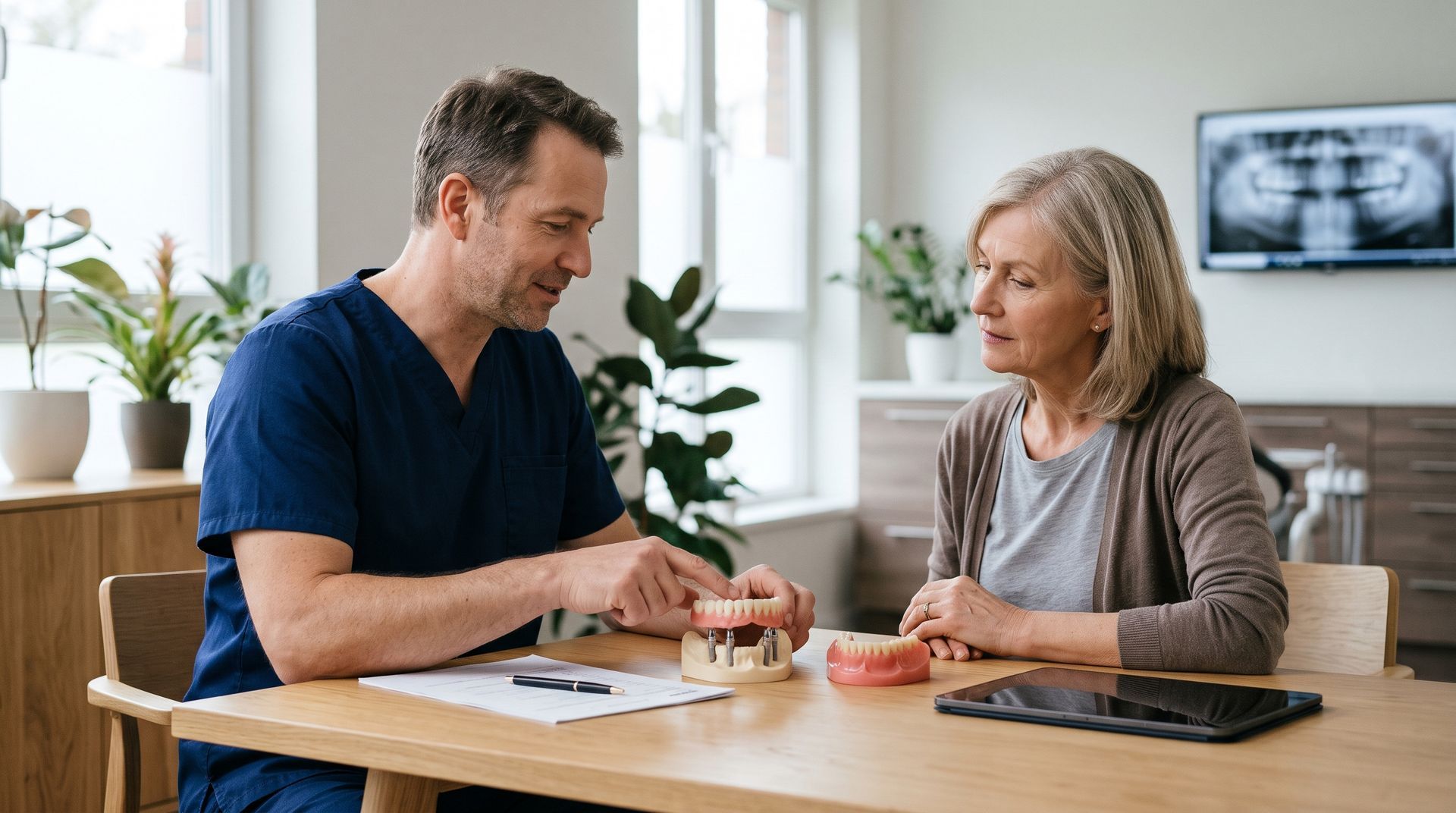
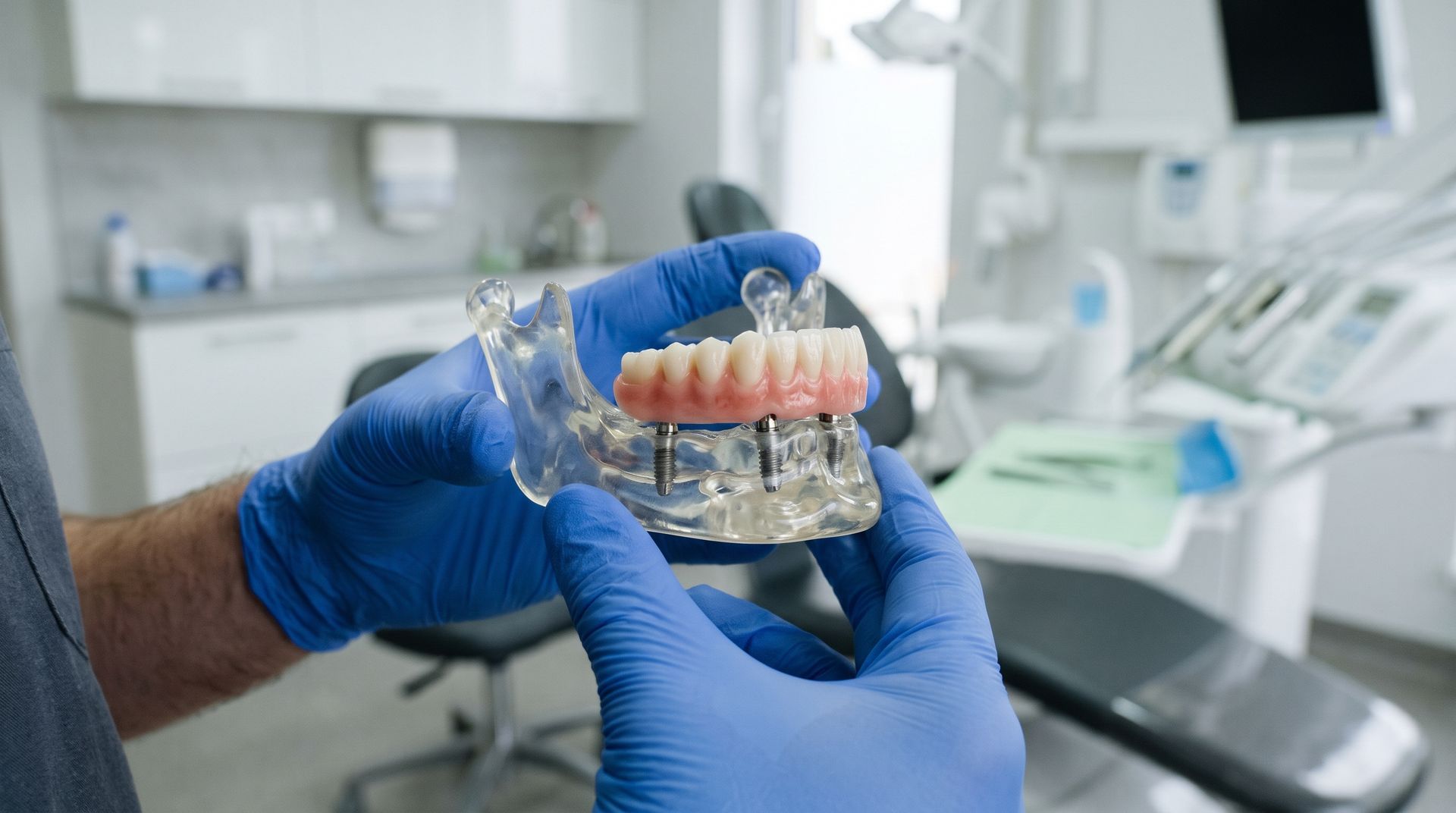
Full Mouth Implants vs. Dentures at a Glance
| Factor | Fixed Full-Arch Implants | Traditional Dentures |
|---|---|---|
| Stability | Fixed in place; does not slip or move | Can shift, click, or come loose, especially lower dentures |
| Chewing | Close to natural; most foods are possible | Reduced; many people avoid hard or chewy foods |
| Jawbone | Implants stimulate the bone they support | Bone continues to shrink over time |
| Palate coverage | Upper teeth do not cover the roof of the mouth | Upper denture covers the palate, which can affect taste |
| Daily care | Brush and clean under the bridge; stays in your mouth | Remove, soak, and clean; adhesives often needed |
| Upfront cost | High | Much lower |
| Long-term costs | Checkups, cleanings, occasional repairs | Relines, adhesives, and replacement every several years |
| Treatment | Surgery, healing time, and multiple visits | No surgery for the denture itself |
Our guide comparing
All-on-4 and dentures goes deeper into the day-to-day differences.
The Benefits of Full Mouth Dental Implants
Teeth That Stay Put
Fixed full-arch implants are attached to implants in the jawbone, so they do not move when you eat, talk, or laugh. For people who have struggled with a loose lower denture, this is often the biggest change.
Real Chewing Ability
Patients with fixed implant teeth can usually eat a much wider range of foods than with dentures, including many that denture wearers give up, such as steak, raw vegetables, and crusty bread. Better chewing can also make it easier to eat a balanced diet.
Preserving Jawbone
After teeth are lost, the jawbone that held them gradually shrinks. Dentures sit on the gums and do not stop that process. Implants transfer chewing forces into the bone, which helps maintain it in the areas where they are placed. That also helps preserve the shape of the lower face.
No Adhesives or Palate Coverage
Fixed implant teeth do not need adhesive, and an upper full-arch bridge does not cover the roof of the mouth the way an upper denture does. Many patients notice food tastes better and speech feels more natural.
Confidence
Patients often tell us the biggest benefit is not having to think about their teeth. They stop worrying about a denture slipping during a conversation or a meal.
The Drawbacks of Full Mouth Dental Implants
High Upfront Cost
Full mouth implants are a major investment. Our guide to full mouth dental implant costs explains that one arch often runs roughly $20,000 to $40,000 and both arches roughly $40,000 to $90,000, depending on the technique, materials, and any preparatory work. Insurance usually covers only a small portion, as our guide on whether insurance covers full mouth dental implants explains.
Surgery and Healing
Treatment involves surgery to remove failing teeth and place implants, usually with sedation. There is swelling and soreness for the first several days, and a soft-food diet while the implants integrate with the bone. Our All-on-4 recovery timeline covers what the first weeks look like.
Temporary Teeth First
Many full-arch patients leave surgery with a fixed temporary bridge, with final teeth made after several months of healing. That means more than one set of teeth and several follow-up visits.
Ongoing Maintenance
Implants cannot decay, but the gums and bone around them can become inflamed and infected if plaque is not removed. Cleaning under a full-arch bridge takes a water flosser or specialized floss every day, along with professional cleanings. Our guide to caring for full-arch implants explains the routine.
Repairs Over Time
The bridge itself can chip, wear, or need repair over the years, especially acrylic bridges or for patients who grind their teeth. Our comparison of zirconia vs. acrylic full-arch implants explains how material choice affects durability.
Not Everyone Is a Candidate Right Away
Bone loss, gum disease, smoking, and some medical conditions can require additional procedures or delay treatment.
What the Long-Term Research Shows
All-on-4 Studies
The All-on-4 concept has some of the longest published follow-up data in full-arch implant dentistry. In a study of lower-jaw All-on-4 patients followed for 10 to 18 years, the prosthesis survival rate was 98.8 percent and implant survival was 93 percent. A study of upper-jaw All-on-4 patients followed for up to 13 years reported prosthesis success of 99.2 percent and implant survival of 94.7 percent.
What Those Numbers Mean
Prosthesis survival means the patient still had a working fixed bridge, even if an individual implant had to be replaced along the way. The same research also notes that biological and mechanical complications can happen, which is why regular maintenance matters.
Concepts With More Implants
A systematic review comparing All-on-4 with designs using more than four implants found comparable prosthesis survival rates over follow-up periods of up to 20 years. Options like
All-on-6 and
3-on-6 add support in some cases, depending on bone and bite.
Cost vs. Long-Term Value
Thinking in Years, Not Just Dollars
A simple way to compare options is cost per year of use. As an illustration only, a $30,000 arch that serves you for 20 years works out to about $1,500 a year. That is before maintenance, but it shows why many patients view implants as a long-term investment rather than a one-time expense.
What Dentures Cost Over Time
Dentures cost far less upfront, but they come with their own ongoing expenses. Relines, adhesives, repairs, and replacement every several years add up, and dentures do not slow bone loss. Over decades, the gap between the two options narrows, though dentures usually remain the lower-cost choice.
The Hidden Value
Some of the value is hard to put a price on: eating comfortably with family, speaking without worry, and not managing a removable appliance every day. For many of our patients, those changes are the real reason the investment feels worth it.
Ways to Make It Manageable
Financing, phased treatment of one arch at a time, HSA or FSA funds, and timing treatment to use insurance benefits can all make the investment more manageable. Our 10-year implant warranty, which applies when patients keep up with cleanings and checkups every six months, also helps protect the investment.
When Full Mouth Implants Are Worth It
They usually make the most sense for people who:
- Are missing most or all teeth in one or both arches, or have teeth that cannot be saved.
- Struggle with dentures that slip, cause sore spots, or limit what they can eat.
- Are in reasonably good health, with conditions such as diabetes under control.
- Have enough bone, or are willing to undergo grafting or alternative approaches if needed.
- Can commit to daily cleaning and regular professional maintenance.
- Plan to keep their teeth for many years and value long-term function over the lowest upfront cost.
Patients with significant bone loss are not automatically ruled out. Our guides on
bone grafts for implants and
zygomatic implants vs. bone grafts explain the options.
When Full Mouth Implants May Not Be Worth It Yet
Uncontrolled Health Conditions
Poorly controlled diabetes and some other medical conditions can affect healing. Getting those under control first improves the odds of success.
Heavy Smoking
Smoking raises the risk of implant problems. Many patients are advised to quit or significantly cut back before and after surgery.
Teeth That Can Still Be Saved
If most of your natural teeth are healthy or restorable, replacing them all with implants may not be the best choice. Single implants, bridges, or other treatment may make more sense. Our single tooth replacement and multiple teeth replacement options cover those situations.
Budget Pressure
If the cost would create serious financial strain, a well-made denture or an implant-supported removable denture may be a reasonable first step. Some patients start there and move to a fixed bridge later.
Fixed Full-Arch Bridges
All-on-4, All-on-6, and 3-on-6 attach teeth that only your dentist can remove. They offer the most natural feel and function and carry the highest cost.
Implant-Supported Removable Dentures
Two to four implants can hold a removable denture firmly in place with snap attachments. This costs less than a fixed bridge and is much more stable than a regular denture, though it still comes out for cleaning.
Choosing Between Them
The right choice depends on your bone, your bite, your budget, and how much you value a fixed result. Our
full teeth replacement page outlines the options we offer.
What Patients Say Changes Most
Eating
Patients often describe going back to foods they had avoided for years. Meals become social again instead of something to manage.
Speaking and Smiling
Without a denture shifting or a palate covered, speech often feels more natural, and patients smile without worrying about what others see.
Daily Routine
Removing, soaking, and gluing dentures is replaced by brushing and cleaning under the bridge, much like caring for natural teeth with a few extra tools.

Questions to Ask Before You Decide
- How many implants will I need, and why that number?
- Will I need bone grafting, extractions, or other preparatory work?
- What material will my final teeth be made of, and how long does it typically last?
- What does the price include, from surgery and temporaries to final teeth and follow-ups?
- What happens if an implant or the bridge has a problem later?
- What warranty applies, and what do I need to do to keep it valid?
- What maintenance schedule will I need after treatment?
Our list of
questions to ask your dental implant dentist covers more of what to discuss.
Get a Personalized Answer
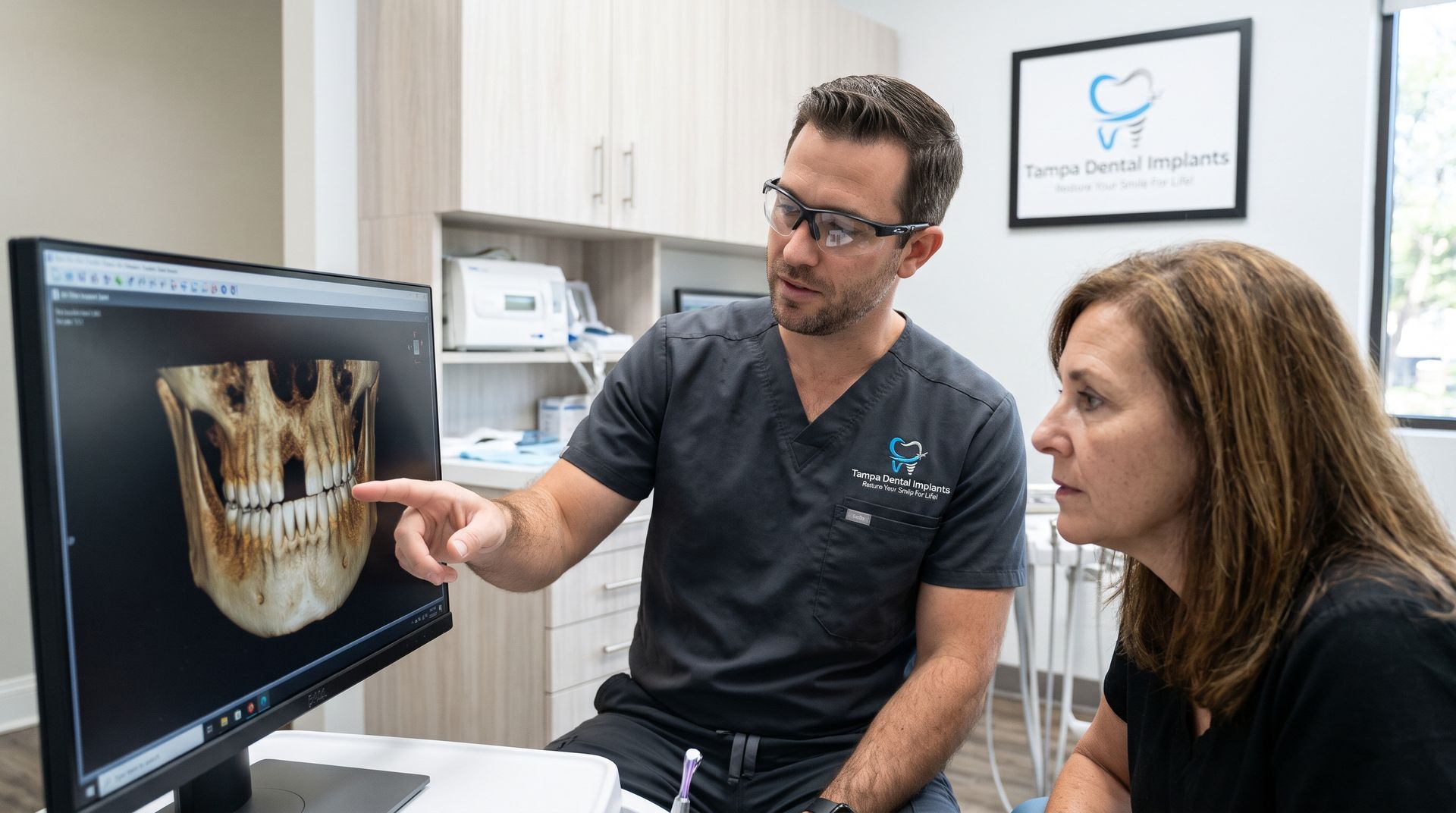
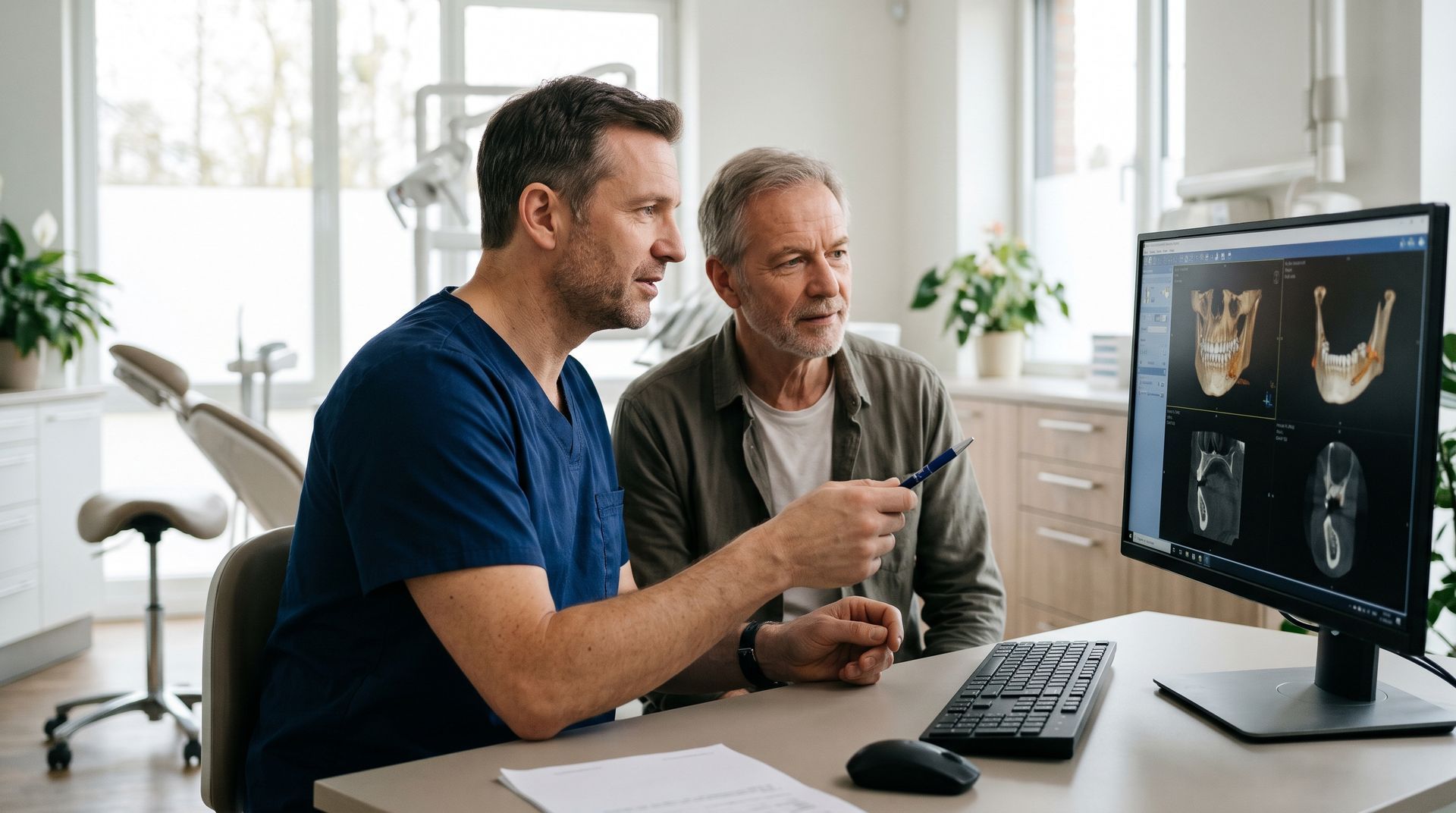
The only way to know if full mouth implants are worth it for you is a thorough evaluation of your teeth, gums, bone, health, and goals. At your free consultation, Dr. Osman reviews 3D imaging, explains your options, and gives you a written plan with clear costs. You can see results from other patients in our work and read patient reviews.
Call Tampa Dental Implants at (813) 212-2628 or
contact us online. We are located at 2425 Brunello Trace in Lutz and serve patients across Tampa Bay, including
Westchase,
Odessa, and
Temple Terrace.
Frequently Asked Questions
Are full mouth dental implants worth the money?
For most healthy adults missing most or all of their teeth, yes. They restore close to natural chewing, stay fixed, and help preserve bone, and long-term studies show high prosthesis survival. They cost much more upfront than dentures, so value depends on your health, goals, and budget.
How long do full mouth dental implants last?
The implants can last decades with good care, and studies of the All-on-4 approach report prosthesis survival around 99 percent at 10 years or more. The bridge itself may need repairs or replacement over time depending on the material and bite forces.
What are the disadvantages of full mouth dental implants?
The main drawbacks are high upfront cost, surgery and healing time, temporary teeth during healing, daily cleaning under the bridge, and the possibility of repairs or complications over time.
Are full mouth implants better than dentures?
For stability, chewing, and bone preservation, fixed implants generally outperform dentures. Dentures cost much less upfront and do not require surgery, so they remain a reasonable choice for some patients.
Who should not get full mouth dental implants?
People with uncontrolled medical conditions, heavy smokers who cannot cut back, patients whose natural teeth can still be saved, and those unable to maintain daily cleaning may need to wait or consider other options.
Share This Blog